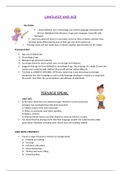
LANGUAGE AND AGE
Key Points:
Unprecedented rise in technology use and the language associated with
this has highlighted the infuence of age upon language. Especially with
teenagers.
Gary Ives asked 63 teens in a secondary school in West Yorkshire whether they
felt they spoke diferently ecause of their age and 100% replied yes.
Teenage speak and text speak faces constant negatve representaton in the media.
Penelope Eckert:
Age can e defned y:
1) Chronological age
2) Biological age (physical maturity)
3) Social age (linked to social events such as marriage and children)
Suggests that age isn’t just defned y chronological age. The language of a single 20 year-old
woman and a married with children 20 year-old woman will e diferent.
This links to JENNIFER CHESHIRE (1978) who stated that it was ecoming increasingly
recognised that adult language as well as child language develops in response to important
life events that afect the social relatons and attudes of individuals.
TEENAGE SPEAK.
GARY IVES
In the same study Gary Ives asked teenagers felt their current vernacular
included. Ives concluded from this rief study that:
1) Ta oo is part of the teen vernacular
2) Dialect is commonly used when speaking
3) Slang is common
4) Informal lexical choices are ofen linked y common themes or topics.
Ives found that the teenagers felt that their language wouldn’t e understood y older
generatons. Examples including eef, dench, are and chatng ru ish.
ANNA-BRITA STENSTROM
Found a range of features common in teenage speak:
1) Irregular turn taking
2) Overlaps
3) Indistnct artculaton
4) Word shortenings
5) Teasing and name calling
6) Ver al Duelling
Key Points:
Unprecedented rise in technology use and the language associated with
this has highlighted the infuence of age upon language. Especially with
teenagers.
Gary Ives asked 63 teens in a secondary school in West Yorkshire whether they
felt they spoke diferently ecause of their age and 100% replied yes.
Teenage speak and text speak faces constant negatve representaton in the media.
Penelope Eckert:
Age can e defned y:
1) Chronological age
2) Biological age (physical maturity)
3) Social age (linked to social events such as marriage and children)
Suggests that age isn’t just defned y chronological age. The language of a single 20 year-old
woman and a married with children 20 year-old woman will e diferent.
This links to JENNIFER CHESHIRE (1978) who stated that it was ecoming increasingly
recognised that adult language as well as child language develops in response to important
life events that afect the social relatons and attudes of individuals.
TEENAGE SPEAK.
GARY IVES
In the same study Gary Ives asked teenagers felt their current vernacular
included. Ives concluded from this rief study that:
1) Ta oo is part of the teen vernacular
2) Dialect is commonly used when speaking
3) Slang is common
4) Informal lexical choices are ofen linked y common themes or topics.
Ives found that the teenagers felt that their language wouldn’t e understood y older
generatons. Examples including eef, dench, are and chatng ru ish.
ANNA-BRITA STENSTROM
Found a range of features common in teenage speak:
1) Irregular turn taking
2) Overlaps
3) Indistnct artculaton
4) Word shortenings
5) Teasing and name calling
6) Ver al Duelling