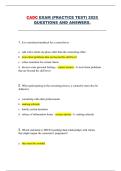
CADC exam (practice test) questions and
answers already passed
1. It |is |considered |unethical |for |a |counselor |to:
a. talk |with |a |client |any |place |other |than |the |counseling |office
b. treat |client |problems |that |are |beyond |his |skill |level
c. refuse |treatment |for |certain |clients
d. discuss |some |personal |feelings |✔✔b. |treat |client |problems |that |are |beyond |his |skill |level
2. When |participating |in |the |screening |process, |a |counselor |must |also |be |skilled |in:
a. consulting |with |other |professionals
b. making |referrals
c. family |system |dynamics
d. release |of |information |forms |✔✔b. |making |referrals
3. Which | statement | is | TRUE | regarding | dual | relationships | with | clients | that | might | impair
| the |counselor's |judgement?
a. they |must |be |avoided
b. they |should |be |discouraged
c. they |are |left |to |the |discretion |of |the |counselor
d. they |should |first |be |discussed |with |one's |superior |✔✔a. |they |must |be |avoided
4. If |the |orientation |process |is |neglected |or |incomplete |a |client |may:
a. remain |in |denial |about |his/her |addiction |and |leave |against |staff |advice
b. have |incorrect |information |and |unanswered |questions |about |the |program
c. need |to |be |referred |to |an |outside |agency |for |additional |counseling
,d. need | additional | education | about | addiction | and | its | effects | on | the | body. | ✔✔b. | have
| incorrect |information |and |unanswered |questions |about |the |program
5. A |common |error |that |counselors |make |when |conducting |an |assessment |is:
a. processing |the |data |collected |from |the |client
b. asking |too |many |questions |and |interrupting |the |client
c. moving |too |quickly |from |data |collection |to |treatment |planning
d. focusing |on |strengths |and |weaknesses |rather |than |relationships |✔✔c. |moving |too |quickly |from
data |collection |to |treatment |planning
|
6. Which |of |the |following |is |essential |for |successful |recovery |from |addiction?
a. admitting |to |a |drinking |and/or |drug |problem
b. working |all |12 |steps |of |a |12-step |program
c. inpatient |treatment |and |aftercare
d. resolving |family |issues |✔✔a. |admitting |to |a |drinking |and/or |drug |problem
7. Interventions |by |a |group |counselor |should:
a. be |governed |by |group |content |as |outlined |during |the |orientation |process
b. address |issues |critical |to |the |functioning |of |the |group |as |a |whole
c. disregard |the |group |process |when |it |is |deemed |necessary
d. only |be |made |to |halt |potential |violence |✔✔b. |address |issues |critical |to |the |functioning |of |the
group |as |a |whole
|
8. When |clients |ask |directly |for |advice, |it |is |usually |helpful |for |counselors |to:
a. avoid |offering |advice, |since |it |negatively |effects |communication |with |the |client
b. encourage |the |client |to |explore |various |alternatives
c. discuss |with |the |client |his/her |request |for |advice
, d. give |advice |since |it |encourages |independence |in |the |counseling |relationship |✔✔b. |encourage |the
client |to |explore |various |alternatives
|
9. Which |of |the |following |does |NOT |have |to |appear |on |a |"Release |of |Information" |form?
a. purpose |of |the |release |of |information
b. name |of |the |recipient |of |information
c. signature |of |counselor
d. signature |of |client |✔✔c. |signature |of |counselor
10. A |client |experiences |a |crisis |situation. |As |a |counselor, |your |MOST |important |function |is:
a. to |solve |the |client's |presenting |problem
b. to |refer |him/her |to |the |nearest |psychiatrist
c. to |help |convert |the |emergency |into |a |solvable |problem
d. to |try |not |to |get |the |client |any |more |upset |than |they |already |are |✔✔c. |to |help |convert |the
emergency |into |a |solvable |problem
|
11. While |progress |has |been |made, |society |still |disapproves |much |more |strongly |of |substance
abuse |by |women |than |by |men. |Which |of |the |following |statements |is |NOT |true?
|
a. women |have |customarily |been |expected |to |live |up |to |a |higher |standard |of |moral |and |social
behavior
|
b. society |perceives |female |substance |abusers |as |promiscuous, |immoral, |and |unfeminine
c. mothers |bear |the |additional |burden |of |guilt |over |how |substance |abuse |has |interfered |with |their
childrearing |responsibilities
|
d. a |number |of |roles |traditionally |deemed |female |- |in |particular, |nurturing |and |maternal |duties |- |are
perceived |as |incompatible |with |drug-affected |behavior |✔✔c. |mothers |bear |the |additional |burden |of
|
guilt |over |how |substance |abuse |has |interfered |with |their |childrearing |responsibilities
|
answers already passed
1. It |is |considered |unethical |for |a |counselor |to:
a. talk |with |a |client |any |place |other |than |the |counseling |office
b. treat |client |problems |that |are |beyond |his |skill |level
c. refuse |treatment |for |certain |clients
d. discuss |some |personal |feelings |✔✔b. |treat |client |problems |that |are |beyond |his |skill |level
2. When |participating |in |the |screening |process, |a |counselor |must |also |be |skilled |in:
a. consulting |with |other |professionals
b. making |referrals
c. family |system |dynamics
d. release |of |information |forms |✔✔b. |making |referrals
3. Which | statement | is | TRUE | regarding | dual | relationships | with | clients | that | might | impair
| the |counselor's |judgement?
a. they |must |be |avoided
b. they |should |be |discouraged
c. they |are |left |to |the |discretion |of |the |counselor
d. they |should |first |be |discussed |with |one's |superior |✔✔a. |they |must |be |avoided
4. If |the |orientation |process |is |neglected |or |incomplete |a |client |may:
a. remain |in |denial |about |his/her |addiction |and |leave |against |staff |advice
b. have |incorrect |information |and |unanswered |questions |about |the |program
c. need |to |be |referred |to |an |outside |agency |for |additional |counseling
,d. need | additional | education | about | addiction | and | its | effects | on | the | body. | ✔✔b. | have
| incorrect |information |and |unanswered |questions |about |the |program
5. A |common |error |that |counselors |make |when |conducting |an |assessment |is:
a. processing |the |data |collected |from |the |client
b. asking |too |many |questions |and |interrupting |the |client
c. moving |too |quickly |from |data |collection |to |treatment |planning
d. focusing |on |strengths |and |weaknesses |rather |than |relationships |✔✔c. |moving |too |quickly |from
data |collection |to |treatment |planning
|
6. Which |of |the |following |is |essential |for |successful |recovery |from |addiction?
a. admitting |to |a |drinking |and/or |drug |problem
b. working |all |12 |steps |of |a |12-step |program
c. inpatient |treatment |and |aftercare
d. resolving |family |issues |✔✔a. |admitting |to |a |drinking |and/or |drug |problem
7. Interventions |by |a |group |counselor |should:
a. be |governed |by |group |content |as |outlined |during |the |orientation |process
b. address |issues |critical |to |the |functioning |of |the |group |as |a |whole
c. disregard |the |group |process |when |it |is |deemed |necessary
d. only |be |made |to |halt |potential |violence |✔✔b. |address |issues |critical |to |the |functioning |of |the
group |as |a |whole
|
8. When |clients |ask |directly |for |advice, |it |is |usually |helpful |for |counselors |to:
a. avoid |offering |advice, |since |it |negatively |effects |communication |with |the |client
b. encourage |the |client |to |explore |various |alternatives
c. discuss |with |the |client |his/her |request |for |advice
, d. give |advice |since |it |encourages |independence |in |the |counseling |relationship |✔✔b. |encourage |the
client |to |explore |various |alternatives
|
9. Which |of |the |following |does |NOT |have |to |appear |on |a |"Release |of |Information" |form?
a. purpose |of |the |release |of |information
b. name |of |the |recipient |of |information
c. signature |of |counselor
d. signature |of |client |✔✔c. |signature |of |counselor
10. A |client |experiences |a |crisis |situation. |As |a |counselor, |your |MOST |important |function |is:
a. to |solve |the |client's |presenting |problem
b. to |refer |him/her |to |the |nearest |psychiatrist
c. to |help |convert |the |emergency |into |a |solvable |problem
d. to |try |not |to |get |the |client |any |more |upset |than |they |already |are |✔✔c. |to |help |convert |the
emergency |into |a |solvable |problem
|
11. While |progress |has |been |made, |society |still |disapproves |much |more |strongly |of |substance
abuse |by |women |than |by |men. |Which |of |the |following |statements |is |NOT |true?
|
a. women |have |customarily |been |expected |to |live |up |to |a |higher |standard |of |moral |and |social
behavior
|
b. society |perceives |female |substance |abusers |as |promiscuous, |immoral, |and |unfeminine
c. mothers |bear |the |additional |burden |of |guilt |over |how |substance |abuse |has |interfered |with |their
childrearing |responsibilities
|
d. a |number |of |roles |traditionally |deemed |female |- |in |particular, |nurturing |and |maternal |duties |- |are
perceived |as |incompatible |with |drug-affected |behavior |✔✔c. |mothers |bear |the |additional |burden |of
|
guilt |over |how |substance |abuse |has |interfered |with |their |childrearing |responsibilities
|