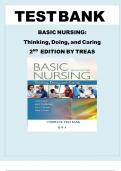
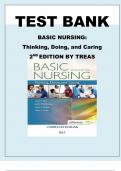
BASIC NURSING THINKING DOING AND CARING
2ND EDITION BY TREAS CHAPTER 1-46
,Contents:
I. How Nurses Think
Chapter 1. Nursing Past & Present
Chapter 2. Critical Thinking and Nursing Process
Chapter 3. Assessment
Chapter 4. Nursing Process: Diagnosis
Chapter 5. Planning Outcomes
Chapter 6. Planning Interventions
Chapter 7. Implementation & Evaluation
Chapter 8. Theory, Research, & Evidence Based Practice
II. Factors Affecting Health
Chapter 9. Development: Infancy through Middle Adulthood
Chapter 10. Development: Older Adulthood
Chapter 11. Experiencing Health and Illness
Chapter 12. Stress & Adaptation
Chapter 13. Psychosocial Health & Illness
Chapter 14. Family
Chapter 15. Culture and Ethnicity
Chapter 16. Spirituality
Chapter 17. Loss, Grief, & Dying
III. Essential Nursing Interventions
Chapter 18. Documenting & Reporting
Chapter 19. Vital Signs
Chapter 20. Communicating & Therapeutic Relationships
Chapter 21. Physical Assessment
Chapter 22. Infection Prevention & Control
Chapter 23. Safety
Chapter 24. Hygiene
Chapter 25. Administering Medications
Chapter 26. Teaching & Learning
Chapter 27. Health Promotion
IV. Supporting Physiological Functioning
Chapter 28. Nutrition
Chapter 29. Bowel Elimination
Chapter 30. Urinary Elimination
Chapter 31. Sensory Perception
Chapter 32. Pain
Chapter 33. Activity & Exercise
Chapter 34. Sexual Health
Chapter 35. Sleep & Rest
Chapter 36. Skin Integrity & Wound Healing
Chapter 37. Oxygenation
Chapter 38. Circulation & Perfusion
Chapter 39. Fluids, Electrolytes, & Acid-Base Balance
V. The Context for Nurses' Work
Chapter 40. Perioperative Nursing
Chapter 41. Leading and Managing
Chapter 42. Community & Home Health Nursing
Chapter 43. Nursing Ethics
Chapter 44. Legal Accountability
Bonus Chapters
Chapter 45. Nursing Informatics
Chapter 46. Holistic Healing
,Chapter 1. Nursing Past & Present
MULTIPLE CHOICE
1. Which is the most influential factor that has shaped the nursing profession?
1) Physicians’ need for handmaidens
2) Societal need for healthcare outside the home
3) Military demand for nurses in the field
4) Germ theory influence on sanitation
ANS: 3
Chapter number and title: 1, Nursing Past & Present
Chapter learning objective: Define nursing in your own
words.Chapter page reference: p. 7
Heading: Historical Context of Nursing
Integrated Processes: Teaching and
Learning
Client Need: Safe and Effective Care Environment: Management of
CareCognitive level: Comprehension [Understanding]
Concept:
ProfessionalismAA
Difficulty: Easy
Feedback
1 The physician's handmaiden was/is a nursing stereotype rather than an
influence
on nursing.
2 Although there has been a need for healthcare outside the home
throughouthistory, this has more inN fluUeR
ncSeo
INnGthKedI NevGel.oCpm
OMent of
hospitals than on nursing; this need provided one more setting for nursing
work.
3 Throughout the centuries, stability of the government has been related to
the success of the military to protect or extend its domain. As the survival
and well-being of soldiers are both critical, nurses provided healthcare to
the sick
and injured at the battle site.
4 Germ theory and sanitation helped to improve healthcare but did not shape
nursing.
PTS: 1 CON: Professionalism
2. Which is an example of an illness-prevention activity?
1) Encouraging the use of a food diary
2) Joining a cancer support group
3) Administering immunization for HPV
4) Teaching a diabetic patient about his diet
ANS: 3
Chapter number and title: 1, Nursing Past & Present
Chapter learning objective: Name and recognize the four purposes of nursing
care.Chapter page reference: p. 15
Heading: Nursing Practice: Caring for Clients
Integrated Processes: Nursing Process –
ImplementationClient Need: Health Promotion and
, Maintenance
2ND EDITION BY TREAS CHAPTER 1-46
,Contents:
I. How Nurses Think
Chapter 1. Nursing Past & Present
Chapter 2. Critical Thinking and Nursing Process
Chapter 3. Assessment
Chapter 4. Nursing Process: Diagnosis
Chapter 5. Planning Outcomes
Chapter 6. Planning Interventions
Chapter 7. Implementation & Evaluation
Chapter 8. Theory, Research, & Evidence Based Practice
II. Factors Affecting Health
Chapter 9. Development: Infancy through Middle Adulthood
Chapter 10. Development: Older Adulthood
Chapter 11. Experiencing Health and Illness
Chapter 12. Stress & Adaptation
Chapter 13. Psychosocial Health & Illness
Chapter 14. Family
Chapter 15. Culture and Ethnicity
Chapter 16. Spirituality
Chapter 17. Loss, Grief, & Dying
III. Essential Nursing Interventions
Chapter 18. Documenting & Reporting
Chapter 19. Vital Signs
Chapter 20. Communicating & Therapeutic Relationships
Chapter 21. Physical Assessment
Chapter 22. Infection Prevention & Control
Chapter 23. Safety
Chapter 24. Hygiene
Chapter 25. Administering Medications
Chapter 26. Teaching & Learning
Chapter 27. Health Promotion
IV. Supporting Physiological Functioning
Chapter 28. Nutrition
Chapter 29. Bowel Elimination
Chapter 30. Urinary Elimination
Chapter 31. Sensory Perception
Chapter 32. Pain
Chapter 33. Activity & Exercise
Chapter 34. Sexual Health
Chapter 35. Sleep & Rest
Chapter 36. Skin Integrity & Wound Healing
Chapter 37. Oxygenation
Chapter 38. Circulation & Perfusion
Chapter 39. Fluids, Electrolytes, & Acid-Base Balance
V. The Context for Nurses' Work
Chapter 40. Perioperative Nursing
Chapter 41. Leading and Managing
Chapter 42. Community & Home Health Nursing
Chapter 43. Nursing Ethics
Chapter 44. Legal Accountability
Bonus Chapters
Chapter 45. Nursing Informatics
Chapter 46. Holistic Healing
,Chapter 1. Nursing Past & Present
MULTIPLE CHOICE
1. Which is the most influential factor that has shaped the nursing profession?
1) Physicians’ need for handmaidens
2) Societal need for healthcare outside the home
3) Military demand for nurses in the field
4) Germ theory influence on sanitation
ANS: 3
Chapter number and title: 1, Nursing Past & Present
Chapter learning objective: Define nursing in your own
words.Chapter page reference: p. 7
Heading: Historical Context of Nursing
Integrated Processes: Teaching and
Learning
Client Need: Safe and Effective Care Environment: Management of
CareCognitive level: Comprehension [Understanding]
Concept:
ProfessionalismAA
Difficulty: Easy
Feedback
1 The physician's handmaiden was/is a nursing stereotype rather than an
influence
on nursing.
2 Although there has been a need for healthcare outside the home
throughouthistory, this has more inN fluUeR
ncSeo
INnGthKedI NevGel.oCpm
OMent of
hospitals than on nursing; this need provided one more setting for nursing
work.
3 Throughout the centuries, stability of the government has been related to
the success of the military to protect or extend its domain. As the survival
and well-being of soldiers are both critical, nurses provided healthcare to
the sick
and injured at the battle site.
4 Germ theory and sanitation helped to improve healthcare but did not shape
nursing.
PTS: 1 CON: Professionalism
2. Which is an example of an illness-prevention activity?
1) Encouraging the use of a food diary
2) Joining a cancer support group
3) Administering immunization for HPV
4) Teaching a diabetic patient about his diet
ANS: 3
Chapter number and title: 1, Nursing Past & Present
Chapter learning objective: Name and recognize the four purposes of nursing
care.Chapter page reference: p. 15
Heading: Nursing Practice: Caring for Clients
Integrated Processes: Nursing Process –
ImplementationClient Need: Health Promotion and
, Maintenance