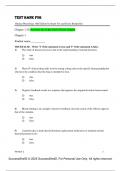
Guyton and Hall Textbook of Medical Physiology 14th
Edition Hall Test Bank
Chapter 1. Functional Organization of the Human Body and Control of the
“Internal Environment”
Test Bank
1. The most abundant type of cell in the human body is which of the following?
A. Neuron
B. Epithelial cell
C. Red blood cell
D. White blood cell
E. Vascular smooth muscle cell
F. Skeletal muscle cell
ANS: C
2. The most abundant substance in the human body and the approximate percentage of
that substance in the body is which of the following?
A. Protein, 30%
B. Protein, 60%
C. Water, 30%
D. Water, 60%
E. Carbohydrate, 30%
F. Carbohydrate, 60%
ANS: D
3. A large volume of blood is transfused to a person whose baroreceptor blood pressure
control system is not functioning and arterial blood pressure rises from the normal level
of 100 to 160 mm Hg. If the same volume of blood is infused into the same person when
the baroreceptor system is functioning and this time the arterial pressure increases from
the normal level from 100 mm Hg up to 120 mm Hg, calculate the gain of the
baroreceptor system in this person.
A. -3
B. -2
C. -1
D. 0
SuccessShelf2 © 2025 SuccessShelf2. For Personal Use Only. All rights reserved.
, E. +1
F. +2
G. +3
ANS: B
4. Which of the following substances has the highest extracellular fluid to intracellular
fluid concentration ratio for most mammalian cells?
A. Sodium ions
B. Potassium ions
C. Carbon dioxide
D. Glucose
E. Protein
ANS: A
5. Exchange of substances between the cardiovascular system and the interstitial fluid
occurs mainly in which of the following?
A. Arteries
B. Arterioles
C. Capillaries
D. Venules
E. Veins
ANS: C
6. Which of the following is the approximate distance from the capillaries to most cells
of the body?
A. Less than 50 angstroms
B. Less than 50 microns
C. Less than 50 millimeters
D. Less than 100 angstroms
E. Less than 100 microns
F. Less than 100 millimeters
ANS: A
7. When a person is at rest, how much time is required for the blood in the circulation to
traverse the entire circulatory circuit?
A. 1 second
B. 1 minute
C. 3 minutes
D. 4 minutes
E. 5 minutes
ANS: B
SuccessShelf2 © 2025 SuccessShelf2. For Personal Use Only. All rights reserved.
,8. ______ feedback is often referred to as a "vicious cycle" because it leads to _______
instability and sometimes death.
A. Postitive, progressive
B. Positive, diminished
C. Negative, progressive
D. Negative, diminished
E. Adaptive, progressive
ANS: A
9. Which of the following is an example of positive feedback in the body?
A. Clotting of blood
B. Return of blood pressure toward normal after a hemorrhage
C. Increased respiration rate caused by accumulation of carbon dioxide in the blood
D. Decreased sympathetic nervous system activity that occurs in response to increased
blood pressure
ANS: A
Chapter 2. The Cell and Its Functions
Test Bank
Refer to the following list to answer questions 1-3:
A. Nucleolus
B. Nucleus
C. Agranular endoplasmic reticulum
D. Granular endoplasmic reticulum
E. Golgi apparatus
F. Endosomes
G. Peroxisomes
H. Lysosomes
I. Cytosol
Identify the cellular location for each of the following steps involved in the synthesis and
packaging of a secreted protein.
Initiation of translation.
ANS: I
SuccessShelf2 © 2025 SuccessShelf2. For Personal Use Only. All rights reserved.
, Protein sorting and packaging.
ANS: E
Gene transcription.
ANS: B
4. Which of the following is true for both pinocytosis and phagocytosis?
A. Involves the recruitment of actin filaments
B. Occurs spontaneously and non-selectively
C. Permits the uptake of bacterium into the cytosol
D. Is only observed in macrophages and neutrophils
E. Does not require ATP
ANS: A
5. The cell membrane is LEAST permeable to which of the following?
A. Sodium
B. Oxygen
C. Ethanol
D. Carbon Dioxide
E. Water
ANS: A
6. The term “glycocalyx” refers to:
A. The negatively charged carbohydrate chains that protrude into the cytosol from
glycolipids and integral glycoproteins
B. The negatively charged carbohydrate layer on the outer cell surface
C. The layer of anions aligned on the cytosolic surface of the plasma membrane
D. The large glycogen stores found in “fast” muscles
E. A mechanism of cell-cell attachment
ANS: B
7. Proteins are sorted for their delivery to lysosomes, secretory vesicles and the plasma
membrane in the:
A. Golgi apparatus
B. smooth endoplasmic reticulum
C. nucleus
D. endocytotic vesicle
ANS: A
8. Ubiquinone, an electron acceptor in the electron transport chain (oxidative
phosphorylation), is found in the:
SuccessShelf2 © 2025 SuccessShelf2. For Personal Use Only. All rights reserved.
Edition Hall Test Bank
Chapter 1. Functional Organization of the Human Body and Control of the
“Internal Environment”
Test Bank
1. The most abundant type of cell in the human body is which of the following?
A. Neuron
B. Epithelial cell
C. Red blood cell
D. White blood cell
E. Vascular smooth muscle cell
F. Skeletal muscle cell
ANS: C
2. The most abundant substance in the human body and the approximate percentage of
that substance in the body is which of the following?
A. Protein, 30%
B. Protein, 60%
C. Water, 30%
D. Water, 60%
E. Carbohydrate, 30%
F. Carbohydrate, 60%
ANS: D
3. A large volume of blood is transfused to a person whose baroreceptor blood pressure
control system is not functioning and arterial blood pressure rises from the normal level
of 100 to 160 mm Hg. If the same volume of blood is infused into the same person when
the baroreceptor system is functioning and this time the arterial pressure increases from
the normal level from 100 mm Hg up to 120 mm Hg, calculate the gain of the
baroreceptor system in this person.
A. -3
B. -2
C. -1
D. 0
SuccessShelf2 © 2025 SuccessShelf2. For Personal Use Only. All rights reserved.
, E. +1
F. +2
G. +3
ANS: B
4. Which of the following substances has the highest extracellular fluid to intracellular
fluid concentration ratio for most mammalian cells?
A. Sodium ions
B. Potassium ions
C. Carbon dioxide
D. Glucose
E. Protein
ANS: A
5. Exchange of substances between the cardiovascular system and the interstitial fluid
occurs mainly in which of the following?
A. Arteries
B. Arterioles
C. Capillaries
D. Venules
E. Veins
ANS: C
6. Which of the following is the approximate distance from the capillaries to most cells
of the body?
A. Less than 50 angstroms
B. Less than 50 microns
C. Less than 50 millimeters
D. Less than 100 angstroms
E. Less than 100 microns
F. Less than 100 millimeters
ANS: A
7. When a person is at rest, how much time is required for the blood in the circulation to
traverse the entire circulatory circuit?
A. 1 second
B. 1 minute
C. 3 minutes
D. 4 minutes
E. 5 minutes
ANS: B
SuccessShelf2 © 2025 SuccessShelf2. For Personal Use Only. All rights reserved.
,8. ______ feedback is often referred to as a "vicious cycle" because it leads to _______
instability and sometimes death.
A. Postitive, progressive
B. Positive, diminished
C. Negative, progressive
D. Negative, diminished
E. Adaptive, progressive
ANS: A
9. Which of the following is an example of positive feedback in the body?
A. Clotting of blood
B. Return of blood pressure toward normal after a hemorrhage
C. Increased respiration rate caused by accumulation of carbon dioxide in the blood
D. Decreased sympathetic nervous system activity that occurs in response to increased
blood pressure
ANS: A
Chapter 2. The Cell and Its Functions
Test Bank
Refer to the following list to answer questions 1-3:
A. Nucleolus
B. Nucleus
C. Agranular endoplasmic reticulum
D. Granular endoplasmic reticulum
E. Golgi apparatus
F. Endosomes
G. Peroxisomes
H. Lysosomes
I. Cytosol
Identify the cellular location for each of the following steps involved in the synthesis and
packaging of a secreted protein.
Initiation of translation.
ANS: I
SuccessShelf2 © 2025 SuccessShelf2. For Personal Use Only. All rights reserved.
, Protein sorting and packaging.
ANS: E
Gene transcription.
ANS: B
4. Which of the following is true for both pinocytosis and phagocytosis?
A. Involves the recruitment of actin filaments
B. Occurs spontaneously and non-selectively
C. Permits the uptake of bacterium into the cytosol
D. Is only observed in macrophages and neutrophils
E. Does not require ATP
ANS: A
5. The cell membrane is LEAST permeable to which of the following?
A. Sodium
B. Oxygen
C. Ethanol
D. Carbon Dioxide
E. Water
ANS: A
6. The term “glycocalyx” refers to:
A. The negatively charged carbohydrate chains that protrude into the cytosol from
glycolipids and integral glycoproteins
B. The negatively charged carbohydrate layer on the outer cell surface
C. The layer of anions aligned on the cytosolic surface of the plasma membrane
D. The large glycogen stores found in “fast” muscles
E. A mechanism of cell-cell attachment
ANS: B
7. Proteins are sorted for their delivery to lysosomes, secretory vesicles and the plasma
membrane in the:
A. Golgi apparatus
B. smooth endoplasmic reticulum
C. nucleus
D. endocytotic vesicle
ANS: A
8. Ubiquinone, an electron acceptor in the electron transport chain (oxidative
phosphorylation), is found in the:
SuccessShelf2 © 2025 SuccessShelf2. For Personal Use Only. All rights reserved.