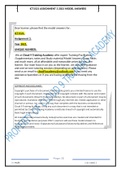
FNP CERTIFICATION EXAM 2025|ACTUAL EXAM
QUESTIONS AND COMPREHENSIVE ANSWERS|LATEST
VERSION|EXPERT VERIFIED FOR GUARANTEED PASS
A 4-year-old child presents for a routine well-child visit. Which immunization booster is
commonly administered between ages 4–6? A. Human papillomavirus (HPV)
B. Meningococcal conjugate vaccine
C. DTaP (Diphtheria, Tetanus, acellular Pertussis)
D. Hepatitis A
Correct Answer: C. DTaP
Rationale: Between 4–6 years, children often receive booster doses of DTaP, polio, MMR, and
varicella. HPV and meningococcal are typically given later.
A 50-year-old patient with newly diagnosed hypertension and no other comorbidities asks about
the goal blood pressure. Current guidelines recommend: A. <150/90 mmHg for all adults
B. <140/90 mmHg for most adults
C. <130/80 mmHg for stage 1 only
D. Allow up to <160/100 mmHg in patients over 60
Correct Answer: B. <140/90 mmHg for most adults
Rationale: For non-geriatric patients with no major comorbidities, target BP <140/90 mmHg is
widely recommended by guidelines. Some newer guidelines suggest <130/80 mmHg in certain
cases, but <140/90 remains a common threshold.
A 23-year-old female presents with an uncomplicated cystitis. She reports no allergies. Which
antibiotic is first-line? A. Nitrofurantoin (Macrobid) for 5 days
B. Vancomycin IV
C. Ciprofloxacin (Cipro) for 14 days
D. Azithromycin single dose
Correct Answer: A. Nitrofurantoin
Rationale: For uncomplicated lower UTIs in an otherwise healthy young woman, nitrofurantoin
(5 days) or trimethoprim-sulfamethoxazole (if local resistance is low) is appropriate. IV
vancomycin is not indicated for uncomplicated UTIs.
A 9-month-old infant is assessed. Which gross motor milestone is most characteristic for this
age? A. Walking independently
B. Rolling from back to front
,C. Sitting without support steadily
D. Jumping with both feet off the ground
Correct Answer: C. Sitting without support steadily
Rationale: By around 9 months, infants typically can sit unsupported for extended periods.
Walking is closer to 12 months; jumping on both feet is around 24 months
A 45-year-old woman with average risk asks about mammogram frequency. Current USPSTF
guidelines recommend: A. Monthly mammograms
B. Yearly mammograms starting at age 30
C. Biennial mammograms starting at age 50
D. Biennial mammograms starting at age 40–50
Correct Answer: C. Biennial mammograms starting at age 50
Rationale: The USPSTF recommends mammograms every two years for average-risk women
ages 50–74. Some clinicians begin discussing it at 40 or 45, but the official USPSTF stance is
age 50 for routine screening.
A 38-year-old patient complains of heartburn and regurgitation twice weekly for 3 months. First-
line pharmacological therapy? A. Proton pump inhibitor (e.g., omeprazole) once daily
B. Antibiotic triple therapy
C. Antacid only after meals
D. Beta-blocker therapy
Correct Answer: A. Proton pump inhibitor (PPI) once daily
Rationale: Persistent GERD symptoms are typically managed with once-daily PPI therapy.
Antibiotics are for H. pylori ulcers. Antacids alone are for very mild/infrequent symptoms.
A 40-year-old female with TSH of 8.0 mIU/L (elevated) and low free T4 has hypothyroid
symptoms. The preferred initial medication and approach is: A. Levothyroxine, start low and
titrate up
B. Liothyronine (T3) only
C. Beta-blockers only
D. High-dose levothyroxine for rapid normalization
Correct Answer: A. Levothyroxine, start low and titrate up
Rationale: Synthetic T4 (levothyroxine) is the first-line therapy for primary hypothyroidism.
Dosing is based on weight and clinical factors, with a start-low approach in some populations.
A 17-year-old with moderate papulopustular acne has been using topical benzoyl peroxide with
minimal improvement. Next recommended step? A. Intralesional steroids
, B. Topical retinoid plus benzoyl peroxide
C. Oral isotretinoin immediately
D. Oral antibiotics alone
Correct Answer: B. Topical retinoid plus benzoyl peroxide
Rationale: For moderate acne, combination therapy with a topical retinoid and benzoyl peroxide
(with or without a topical antibiotic) is the next step. Oral isotretinoin is reserved for severe or
refractory cases.
A 35-year-old complains of fatigue, insomnia, and anhedonia for 3 weeks. Which quick
screening tool might the FNP use initially? A. PHQ-9 (Patient Health Questionnaire)
B. GAD-7
C. CAGE questionnaire
D. MoCA (Montreal Cognitive Assessment)
Correct Answer: A. PHQ-9
Rationale: The PHQ-9 is a common initial depression screening tool. GAD-7 is for anxiety;
CAGE for alcohol misuse; MoCA for cognitive dysfunction.
A 55-year-old male with LDL of 190 mg/dL and no other risk factors seeks guidance. According
to guidelines, the first-line therapy is: A. Lifestyle changes only
B. High-intensity statin therapy
C. Ezetimibe alone
D. Bile acid sequestrant
Correct Answer: B. High-intensity statin therapy
Rationale: For LDL ≥190 mg/dL, guidelines recommend high-intensity statin regardless of
other factors. Lifestyle modifications are adjunctive, but statin therapy is key.
A 2-year-old with acute otitis media has a fever and otalgia, with bulging tympanic membrane.
First-line antibiotic? A. Amoxicillin
B. Azithromycin
C. Ciprofloxacin ear drops
D. Cephalexin
Correct Answer: A. Amoxicillin
Rationale: High-dose amoxicillin is first-line for most children with acute otitis media, unless
they have a penicillin allergy or recent amoxicillin use.
A 22-year-old sexually active female with a new partner asks about recommended STD
screening. Which is recommended at least annually for sexually active women under 25? A.
QUESTIONS AND COMPREHENSIVE ANSWERS|LATEST
VERSION|EXPERT VERIFIED FOR GUARANTEED PASS
A 4-year-old child presents for a routine well-child visit. Which immunization booster is
commonly administered between ages 4–6? A. Human papillomavirus (HPV)
B. Meningococcal conjugate vaccine
C. DTaP (Diphtheria, Tetanus, acellular Pertussis)
D. Hepatitis A
Correct Answer: C. DTaP
Rationale: Between 4–6 years, children often receive booster doses of DTaP, polio, MMR, and
varicella. HPV and meningococcal are typically given later.
A 50-year-old patient with newly diagnosed hypertension and no other comorbidities asks about
the goal blood pressure. Current guidelines recommend: A. <150/90 mmHg for all adults
B. <140/90 mmHg for most adults
C. <130/80 mmHg for stage 1 only
D. Allow up to <160/100 mmHg in patients over 60
Correct Answer: B. <140/90 mmHg for most adults
Rationale: For non-geriatric patients with no major comorbidities, target BP <140/90 mmHg is
widely recommended by guidelines. Some newer guidelines suggest <130/80 mmHg in certain
cases, but <140/90 remains a common threshold.
A 23-year-old female presents with an uncomplicated cystitis. She reports no allergies. Which
antibiotic is first-line? A. Nitrofurantoin (Macrobid) for 5 days
B. Vancomycin IV
C. Ciprofloxacin (Cipro) for 14 days
D. Azithromycin single dose
Correct Answer: A. Nitrofurantoin
Rationale: For uncomplicated lower UTIs in an otherwise healthy young woman, nitrofurantoin
(5 days) or trimethoprim-sulfamethoxazole (if local resistance is low) is appropriate. IV
vancomycin is not indicated for uncomplicated UTIs.
A 9-month-old infant is assessed. Which gross motor milestone is most characteristic for this
age? A. Walking independently
B. Rolling from back to front
,C. Sitting without support steadily
D. Jumping with both feet off the ground
Correct Answer: C. Sitting without support steadily
Rationale: By around 9 months, infants typically can sit unsupported for extended periods.
Walking is closer to 12 months; jumping on both feet is around 24 months
A 45-year-old woman with average risk asks about mammogram frequency. Current USPSTF
guidelines recommend: A. Monthly mammograms
B. Yearly mammograms starting at age 30
C. Biennial mammograms starting at age 50
D. Biennial mammograms starting at age 40–50
Correct Answer: C. Biennial mammograms starting at age 50
Rationale: The USPSTF recommends mammograms every two years for average-risk women
ages 50–74. Some clinicians begin discussing it at 40 or 45, but the official USPSTF stance is
age 50 for routine screening.
A 38-year-old patient complains of heartburn and regurgitation twice weekly for 3 months. First-
line pharmacological therapy? A. Proton pump inhibitor (e.g., omeprazole) once daily
B. Antibiotic triple therapy
C. Antacid only after meals
D. Beta-blocker therapy
Correct Answer: A. Proton pump inhibitor (PPI) once daily
Rationale: Persistent GERD symptoms are typically managed with once-daily PPI therapy.
Antibiotics are for H. pylori ulcers. Antacids alone are for very mild/infrequent symptoms.
A 40-year-old female with TSH of 8.0 mIU/L (elevated) and low free T4 has hypothyroid
symptoms. The preferred initial medication and approach is: A. Levothyroxine, start low and
titrate up
B. Liothyronine (T3) only
C. Beta-blockers only
D. High-dose levothyroxine for rapid normalization
Correct Answer: A. Levothyroxine, start low and titrate up
Rationale: Synthetic T4 (levothyroxine) is the first-line therapy for primary hypothyroidism.
Dosing is based on weight and clinical factors, with a start-low approach in some populations.
A 17-year-old with moderate papulopustular acne has been using topical benzoyl peroxide with
minimal improvement. Next recommended step? A. Intralesional steroids
, B. Topical retinoid plus benzoyl peroxide
C. Oral isotretinoin immediately
D. Oral antibiotics alone
Correct Answer: B. Topical retinoid plus benzoyl peroxide
Rationale: For moderate acne, combination therapy with a topical retinoid and benzoyl peroxide
(with or without a topical antibiotic) is the next step. Oral isotretinoin is reserved for severe or
refractory cases.
A 35-year-old complains of fatigue, insomnia, and anhedonia for 3 weeks. Which quick
screening tool might the FNP use initially? A. PHQ-9 (Patient Health Questionnaire)
B. GAD-7
C. CAGE questionnaire
D. MoCA (Montreal Cognitive Assessment)
Correct Answer: A. PHQ-9
Rationale: The PHQ-9 is a common initial depression screening tool. GAD-7 is for anxiety;
CAGE for alcohol misuse; MoCA for cognitive dysfunction.
A 55-year-old male with LDL of 190 mg/dL and no other risk factors seeks guidance. According
to guidelines, the first-line therapy is: A. Lifestyle changes only
B. High-intensity statin therapy
C. Ezetimibe alone
D. Bile acid sequestrant
Correct Answer: B. High-intensity statin therapy
Rationale: For LDL ≥190 mg/dL, guidelines recommend high-intensity statin regardless of
other factors. Lifestyle modifications are adjunctive, but statin therapy is key.
A 2-year-old with acute otitis media has a fever and otalgia, with bulging tympanic membrane.
First-line antibiotic? A. Amoxicillin
B. Azithromycin
C. Ciprofloxacin ear drops
D. Cephalexin
Correct Answer: A. Amoxicillin
Rationale: High-dose amoxicillin is first-line for most children with acute otitis media, unless
they have a penicillin allergy or recent amoxicillin use.
A 22-year-old sexually active female with a new partner asks about recommended STD
screening. Which is recommended at least annually for sexually active women under 25? A.