UNMC Patho 2 Exam 1: Questions With Innovative
Solutions
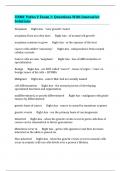
Neoplasm Right Ans - "new growth" tumor
neoplasm Does not obey laws Right Ans - of normal cell growth
neoplasm continue to grow Right Ans - at the expense of the host
cancer cells exhibit "autonomy" Right Ans - independence from normal
cellular controls
Cancer cells are also "anaplasia" Right Ans - loss of differentiation or
specialization
Benign Right Ans - are NOT called "cancer" - tissue of orgin + "oma" ex
benign tumor of fat cells = LIPOMA
Malignant Right Ans - cancer Mal=bad are usually named
cell differentiation Right Ans - the normal process of developing
specialized functions and organization
undifferentiated, or poorly differentiated Right Ans - malignant cells grade
tumors by differentiated
genetic basis of cancer Right Ans - cancer is caused by mutations in genes
genetic events Right Ans - are the primary basis of carcinogenesis
Inherited Right Ans - when the genetic events occur in germ cells then of
course can be transmitted to future generations
Mutations occur in Right Ans - germ cells (gametes) and then becomes
inherited as the allele is passed on
Non-inherited Right Ans - when the genetic events occur in somatic cells
occur in somatic cells (as cells divide over a person's lifetime
, Cancer incidence increases with Right Ans - age - age is the biggest risk
factor for cancer
oncogen Right Ans - mutant gene that promotes cancer cell growth
tumor suppressor gene Right Ans - normally regulates (slows down
proliferation)
Proto-oncogene Right Ans - an oncogene in its normal non-mutant sate
point mutations Right Ans - small DNA changes usually alteration of one or
a few base pairs - remember adenine-thymine and cytosine-guanine
Chromosome translocations Right Ans - break occurs in 2 chromosome and
genetic material is exchanged
A. the translocation of the genetic material causes excess production of factors
that lead to cell proliferation the translocation leads to production of new
B. Proteins that have growth promoting properties
Chromosome amplifications Right Ans - repeated duplication of a small
piece of a chromosome
this usually leads to increased expression of an oncogene
Viral and bacterial causes of cancer Right Ans - cause-effect is difficult to
determine in humans
many associations have been established
viral: HBV -Hep B, HCV-Hep C, Herpes - lymphomes, HPV gential warts and
cervical cancer, Bacteria - H. pylori
Environmental Chemical cancer agents Right Ans - cigarette smoke,
insecticides, asbestos
Environmental Physical cancer agents Right Ans - ultraviolet light,
radiation
Environmental Viral cancer agents Right Ans - HBV, HCV, Herpes, HPV
Solutions
Neoplasm Right Ans - "new growth" tumor
neoplasm Does not obey laws Right Ans - of normal cell growth
neoplasm continue to grow Right Ans - at the expense of the host
cancer cells exhibit "autonomy" Right Ans - independence from normal
cellular controls
Cancer cells are also "anaplasia" Right Ans - loss of differentiation or
specialization
Benign Right Ans - are NOT called "cancer" - tissue of orgin + "oma" ex
benign tumor of fat cells = LIPOMA
Malignant Right Ans - cancer Mal=bad are usually named
cell differentiation Right Ans - the normal process of developing
specialized functions and organization
undifferentiated, or poorly differentiated Right Ans - malignant cells grade
tumors by differentiated
genetic basis of cancer Right Ans - cancer is caused by mutations in genes
genetic events Right Ans - are the primary basis of carcinogenesis
Inherited Right Ans - when the genetic events occur in germ cells then of
course can be transmitted to future generations
Mutations occur in Right Ans - germ cells (gametes) and then becomes
inherited as the allele is passed on
Non-inherited Right Ans - when the genetic events occur in somatic cells
occur in somatic cells (as cells divide over a person's lifetime
, Cancer incidence increases with Right Ans - age - age is the biggest risk
factor for cancer
oncogen Right Ans - mutant gene that promotes cancer cell growth
tumor suppressor gene Right Ans - normally regulates (slows down
proliferation)
Proto-oncogene Right Ans - an oncogene in its normal non-mutant sate
point mutations Right Ans - small DNA changes usually alteration of one or
a few base pairs - remember adenine-thymine and cytosine-guanine
Chromosome translocations Right Ans - break occurs in 2 chromosome and
genetic material is exchanged
A. the translocation of the genetic material causes excess production of factors
that lead to cell proliferation the translocation leads to production of new
B. Proteins that have growth promoting properties
Chromosome amplifications Right Ans - repeated duplication of a small
piece of a chromosome
this usually leads to increased expression of an oncogene
Viral and bacterial causes of cancer Right Ans - cause-effect is difficult to
determine in humans
many associations have been established
viral: HBV -Hep B, HCV-Hep C, Herpes - lymphomes, HPV gential warts and
cervical cancer, Bacteria - H. pylori
Environmental Chemical cancer agents Right Ans - cigarette smoke,
insecticides, asbestos
Environmental Physical cancer agents Right Ans - ultraviolet light,
radiation
Environmental Viral cancer agents Right Ans - HBV, HCV, Herpes, HPV