TEST BANK 2025
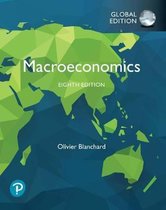
Macroeconomics 8th Global Edition
Olivier Blanchard
9781292351476
134 questions and answers (separate) from
all chapters
Multiple choice (24)
Open (50)
True/Untrue (25)
Fill in the blank (35)
+ important trends/developments 2025 and onward
+ 50 core concepts macroeconomics you MUST know explained
+ expected global developments Macroeconomics for 2025 & the next
decade
+ with sources citated (clickable)
Pag: 34
Reading time: 60 min.
,
,50 Open Questions – answers separately
Chapter 1: A Tour of the World
1. What are the primary differences between advanced and emerging
economies in terms of GDP growth?
2. How did the 2008 global financial crisis impact economic policies
worldwide?
3. What role does the International Monetary Fund (IMF) play in
stabilizing global economies?
4. How does inflation differ across countries, and what are its main
drivers?
Chapter 2: A Tour of the Book
5. Why is understanding the relationship between output,
unemployment, and inflation important in macroeconomics?
6. What are the three main types of macroeconomic markets discussed
in the book?
7. How does the IS-LM model contribute to understanding short-term
economic fluctuations?
8. Why is the study of expectations critical in macroeconomic models?
Chapter 3: The Goods Market
9. What factors influence the demand for goods in an economy?
10. How does government fiscal policy affect the goods market?
11. What is the role of the multiplier in determining changes in
output?
12. Why is the concept of equilibrium important in the goods
market?
Chapter 4: Financial Markets
13. How do central banks influence interest rates in financial
markets?
14. What is the difference between money demand and money
supply?
, 15. How does liquidity preference theory explain changes in
interest rates?
16. Why is the role of bonds significant in financial market
equilibrium?
Chapter 5: Goods and Financial Markets: The IS-LM
Model
17. What are the key assumptions behind the IS-LM model?
18. How does a fiscal expansion affect the IS curve?
19. How does monetary policy shift the LM curve?
20. What are the limitations of the IS-LM model in analyzing real-
world economies?
Chapter 6: The Labor Market
21. What is the relationship between wage-setting and price-
setting in determining the natural rate of unemployment?
22. How do labor unions influence the labor market equilibrium?
23. What is the difference between frictional and structural
unemployment?
24. How does the Phillips Curve relate unemployment to inflation?
Chapter 7: Putting All Markets Together: The AS-AD
Model
25. How does the aggregate supply curve differ in the short run
versus the medium run?
26. What factors cause shifts in the aggregate demand curve?
27. How does the AS-AD model explain the impact of supply
shocks on the economy?
28. What is the significance of the medium-run equilibrium in the
AS-AD model?
Chapter 8: The Phillips Curve, the Natural Rate of
Unemployment, and Inflation
29. How does the concept of the natural rate of unemployment
evolve over time?
30. What role do expectations play in the modified Phillips Curve?
Macroeconomics 8th Global Edition
Olivier Blanchard
9781292351476
134 questions and answers (separate) from
all chapters
Multiple choice (24)
Open (50)
True/Untrue (25)
Fill in the blank (35)
+ important trends/developments 2025 and onward
+ 50 core concepts macroeconomics you MUST know explained
+ expected global developments Macroeconomics for 2025 & the next
decade
+ with sources citated (clickable)
Pag: 34
Reading time: 60 min.
,
,50 Open Questions – answers separately
Chapter 1: A Tour of the World
1. What are the primary differences between advanced and emerging
economies in terms of GDP growth?
2. How did the 2008 global financial crisis impact economic policies
worldwide?
3. What role does the International Monetary Fund (IMF) play in
stabilizing global economies?
4. How does inflation differ across countries, and what are its main
drivers?
Chapter 2: A Tour of the Book
5. Why is understanding the relationship between output,
unemployment, and inflation important in macroeconomics?
6. What are the three main types of macroeconomic markets discussed
in the book?
7. How does the IS-LM model contribute to understanding short-term
economic fluctuations?
8. Why is the study of expectations critical in macroeconomic models?
Chapter 3: The Goods Market
9. What factors influence the demand for goods in an economy?
10. How does government fiscal policy affect the goods market?
11. What is the role of the multiplier in determining changes in
output?
12. Why is the concept of equilibrium important in the goods
market?
Chapter 4: Financial Markets
13. How do central banks influence interest rates in financial
markets?
14. What is the difference between money demand and money
supply?
, 15. How does liquidity preference theory explain changes in
interest rates?
16. Why is the role of bonds significant in financial market
equilibrium?
Chapter 5: Goods and Financial Markets: The IS-LM
Model
17. What are the key assumptions behind the IS-LM model?
18. How does a fiscal expansion affect the IS curve?
19. How does monetary policy shift the LM curve?
20. What are the limitations of the IS-LM model in analyzing real-
world economies?
Chapter 6: The Labor Market
21. What is the relationship between wage-setting and price-
setting in determining the natural rate of unemployment?
22. How do labor unions influence the labor market equilibrium?
23. What is the difference between frictional and structural
unemployment?
24. How does the Phillips Curve relate unemployment to inflation?
Chapter 7: Putting All Markets Together: The AS-AD
Model
25. How does the aggregate supply curve differ in the short run
versus the medium run?
26. What factors cause shifts in the aggregate demand curve?
27. How does the AS-AD model explain the impact of supply
shocks on the economy?
28. What is the significance of the medium-run equilibrium in the
AS-AD model?
Chapter 8: The Phillips Curve, the Natural Rate of
Unemployment, and Inflation
29. How does the concept of the natural rate of unemployment
evolve over time?
30. What role do expectations play in the modified Phillips Curve?