SCM Fundamentals
Week 1
Lecture 1A1
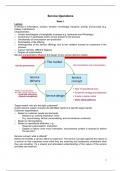
Supply chain management (SCM) encompasses the planning and management of all activities
involved in procurement, production of goods or service transformation and all logistics
management activities, including reverse logistics. It includes coordination and collaboration
with channel partners, such as suppliers, intermediaries, third-party service providers, and
customers.
In essence, SCM integrates supply and demand management within and across companies.
o Within companies, SCM drives the coordination of processes and activities across
marketing, sales, product design, finance, and information technology.
o Across companies, SCM oversees the flow of goods and services, and related
information flow, from their point of origin to the point of consumption and back, with
the primary aim of meeting customers’ requirements while simultaneously ensuring
sustainability and generating profit.
Strategic SCM: what to achieve with supply chain (cost leadership, differentiation, focus
strategy). Decisions about the structure of the supply chain and what processes each stage
will perform. Supply chain design must support strategic objectives. Supply chain strategic
decisions are long-term and expensive to reverse.
Operational SCM: what you do in your supply chain. How do organisations work together in
supply chains daily to achieve a certain performance? Performance: achieve what customers
want. Integration and coordination: working well together without barriers.
Market strategies:
Supply chain strategies:
o Demand characteristics
1
, o Supply characteristics
o Framework
o Matched strategies
External collaboration: the mutually beneficial relationships formed among firms to share
improved outcomes and benefits, which are based on appropriate levels of trust, information
sharing, joint decisions, and, where necessary, processes of supply chain integration.
Internal collaboration or cross-functional integration: the organisation works as a unified whole
and the capability of the organisation to transfer, process, interpret, and exploit information
across functional sub-units is frictionless.
Cross-functional collaboration enhances operational performance. It prevents functional units
from prioritising their own agendas over organisational objectives. It reduces silo-thinking by
fostering cross-functional consensus. It balances the identity of functional units within
collaborative teams, and it resolves conflicts from differing expectations and priorities.
Lecture 1A2
The successive parties in the supply chain add value to the product or service. Don’t view them
as individual parties but as a coherent whole.
2
, Value chain of Porter:
Operations function within an organisation that produces goods/services. Transformation
process: network of activities and buffers to transform inputs in outputs with a value for the
customer.
Value of inventories:
o To decouple parts of the process. To prevent standstills and compensate for variety in
production speeds.
o To decouple parts of the supply chain. Buffering against variations in delivery times and
demand during delivery times.
o To physically present products to customers to choose from.
o To benefit from volume discounts and economies of scale in production/transport.
- Cycle stocks: products that are waiting for processing wait for other products to be
processed together.
- Seasonal stocks: anticipating higher demand that can’t be kept up with production.
o As a protection against risks, such as inflation.
Inventory costs:
o Direct costs of storage: warehouse, heating, personnel, theft, damage, etc.
o Devaluation of the components: if you bought it later, it would have been cheaper.
o Price protection costs: when the manufacturer lowers the price of a product, he has to
pay money back to the retailer for unsold inventory.
o Costs for product returns.
o Costs for obsolescence: if a product can no longer be sold.
3
Week 1
Lecture 1A1
Supply chain management (SCM) encompasses the planning and management of all activities
involved in procurement, production of goods or service transformation and all logistics
management activities, including reverse logistics. It includes coordination and collaboration
with channel partners, such as suppliers, intermediaries, third-party service providers, and
customers.
In essence, SCM integrates supply and demand management within and across companies.
o Within companies, SCM drives the coordination of processes and activities across
marketing, sales, product design, finance, and information technology.
o Across companies, SCM oversees the flow of goods and services, and related
information flow, from their point of origin to the point of consumption and back, with
the primary aim of meeting customers’ requirements while simultaneously ensuring
sustainability and generating profit.
Strategic SCM: what to achieve with supply chain (cost leadership, differentiation, focus
strategy). Decisions about the structure of the supply chain and what processes each stage
will perform. Supply chain design must support strategic objectives. Supply chain strategic
decisions are long-term and expensive to reverse.
Operational SCM: what you do in your supply chain. How do organisations work together in
supply chains daily to achieve a certain performance? Performance: achieve what customers
want. Integration and coordination: working well together without barriers.
Market strategies:
Supply chain strategies:
o Demand characteristics
1
, o Supply characteristics
o Framework
o Matched strategies
External collaboration: the mutually beneficial relationships formed among firms to share
improved outcomes and benefits, which are based on appropriate levels of trust, information
sharing, joint decisions, and, where necessary, processes of supply chain integration.
Internal collaboration or cross-functional integration: the organisation works as a unified whole
and the capability of the organisation to transfer, process, interpret, and exploit information
across functional sub-units is frictionless.
Cross-functional collaboration enhances operational performance. It prevents functional units
from prioritising their own agendas over organisational objectives. It reduces silo-thinking by
fostering cross-functional consensus. It balances the identity of functional units within
collaborative teams, and it resolves conflicts from differing expectations and priorities.
Lecture 1A2
The successive parties in the supply chain add value to the product or service. Don’t view them
as individual parties but as a coherent whole.
2
, Value chain of Porter:
Operations function within an organisation that produces goods/services. Transformation
process: network of activities and buffers to transform inputs in outputs with a value for the
customer.
Value of inventories:
o To decouple parts of the process. To prevent standstills and compensate for variety in
production speeds.
o To decouple parts of the supply chain. Buffering against variations in delivery times and
demand during delivery times.
o To physically present products to customers to choose from.
o To benefit from volume discounts and economies of scale in production/transport.
- Cycle stocks: products that are waiting for processing wait for other products to be
processed together.
- Seasonal stocks: anticipating higher demand that can’t be kept up with production.
o As a protection against risks, such as inflation.
Inventory costs:
o Direct costs of storage: warehouse, heating, personnel, theft, damage, etc.
o Devaluation of the components: if you bought it later, it would have been cheaper.
o Price protection costs: when the manufacturer lowers the price of a product, he has to
pay money back to the retailer for unsold inventory.
o Costs for product returns.
o Costs for obsolescence: if a product can no longer be sold.
3