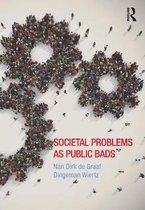
Societal Problems as Public Bads
H1. Introduction
This text explores the concept of societal problems as public bads, contrasting them with
public goods. It examines how societal problems emerge, gain public attention, and potentially
require government intervention.
Key concepts:
Societal vs. Social Problems: The text distinguishes between social problems, occurring in
interpersonal relationships, and societal problems, which arise when social problems affect a
significant portion of society. For example, theft becomes a societal problem when widespread,
impacting social trust and economic stability.
Societal Problems as Public Bads: Societal problems are viewed as public bads arising from
the aggregate, unintended consequences of individual actions. Individuals, acting rationally in their
own self-interest, might not consider the broader societal impact of their choices, leading to
negative externalities. Climate change is a classic example.
The Evolution of Societal Problem Recognition: The text traces the historical shift in
perceiving societal problems. While once considered inevitable, Enlightenment philosophers spurred
a change, viewing societal problems as addressable through reason and societal redesign.
However, the French Revolution highlighted how good intentions could lead to unintended negative
consequences.
The Role of Social Science: The 20th century saw the rise of social science in understanding and
addressing societal problems. Governments increasingly rely on social science insights for policy
decisions.
Process of Problem Recognition and Action: Recognizing societal problems involves:
o The aggregation of individual behaviors causing a society-level situation
o Recognition of the situation as undesirable, conflicting with societal values
o Public awareness and agenda-setting by concerned groups
o Assessment of government intervention feasibility and potential impact
Social Norms as Public Goods: Social norms, acting as a form of social capital, contribute to
societal well-being by fostering trust and predictability in interactions. However, there's debate on
universally accepted norms, with the Universal Declaration of Human Rights facing criticisms for not
going far enough and for imposing Western values.
Philosophical Foundations of Social Norms: Rawls and Nozick offer contrasting perspectives on
a just society:
o Rawls's Egalitarian Liberalism: Rawls advocates for a society where the state ensures
basic liberties and minimizes inequality, permitting inequalities only if they benefit the least
advantaged.
o Nozick's Libertarianism: Nozick prioritizes individual liberty, arguing for a minimal state
that protects individual rights (especially property rights) and refrains from interfering in
voluntary interactions.
Political Ideologies: The text contrasts socialism, liberalism, and conservatism regarding state
intervention in addressing societal problems.
o Socialists favor state intervention to promote individual well-being and reduce inequality.
o Liberals prioritize individual freedom, advocating for limited state intervention.
o Conservatives emphasize tradition, gradual change, and the unintended benefits of
established institutions.
,Spheres of Society: The text analyzes the interplay of the state, market, civic, and private
spheres, highlighting areas of tension and overlap. It also examines how the media's role has
evolved with social media.
Typology of Goods: The text categorizes goods based on excludability (preventing consumption)
and rivalry (consumption by one reduces availability for others). This leads to:
o Private Goods: Excludable and rival (e.g., food, clothing)
o Club Goods: Excludable but non-rival (e.g., cinemas, gyms)
o Common-pool resources: Rival but non-excludable (e.g., fish stocks, timber)
o Public Goods: Non-excludable and non-rival (e.g., infrastructure, clean environment)
Provision of Goods: Markets efficiently allocate private and club goods, while the state often
provides public goods due to their non-excludable nature. Common-pool resources can be
managed by states, communities, or private actors, with the potential for the "tragedy of the
commons" when unchecked exploitation occurs.
Social Capital as a Public Good: Social capital, built on networks, norms, and trust, is a valuable
public good that facilitates cooperation and benefits society as a whole. Examples include social
norms in Cairo's souk and the doctor-patient relationship. However, social capital can also have
negative consequences, fostering exclusion and enabling harmful practices within closed networks.
Selection of Societal Problems: The text focuses on problems in industrialized societies that are
publicly recognized as significant, aligning with the framework of public bads. It emphasizes that
societal problems often stem from the aggregate impact of individually rational actions, even when
driven by good intentions. Examples include environmental degradation and the unintended
consequences of welfare state policies.
Government Intervention: Recognizing that government intervention isn't always necessary or
effective, the text acknowledges the potential for government actions to backfire.
, H2. Analytical framework
The macro-micro-macro model posits that to understand societal-level occurrences, we need to
examine the behaviors of individual actors within their macro-level context. The model consists of
four steps:
o Macro-level conditions impact the micro-level conditions of individual actors,
shaping their opportunities and constraints.
o Individual actors, given their micro-level conditions and personal objectives,
engage in specific behaviors, leading to micro-level outcomes.
o The aggregation of these micro-level outcomes creates macro-level outcomes,
sometimes in a simple summation but often through complex interactions.
o Through these three steps, the model connects macro-level conditions to macro-
level outcomes, providing explanations for observed relationships.
The hog cycle is a good example of this model in action. Initially, low pork supply and high prices at
the macro level lead individual farmers to increase their pig production. However, the collective
action of many farmers increasing production leads to a surplus of pork, dropping the price. This
drop then discourages farmers, leading to decreased production and eventually a return to low
supply and high prices, restarting the cycle.
Understanding Individual Actors and Their Behaviors
The sources also emphasize the need to understand the behavior of individual actors, also known
as methodological individualism, to explain macro-level phenomena. It is crucial to acknowledge
that individual actors are not always aware of their motives or may act strategically,
concealing their true intentions. Researchers can infer motives through observing actions and
verbal statements, though inconsistencies between the two can arise.
The concept of rationality plays a crucial role in understanding individual behavior. Rationality
suggests that individuals, given their circumstances, act in a sensible manner to achieve
their goals. However, it's important to recognize that rationality is bounded. Individuals may not
have access to all necessary information, face cognitive limits, or exhibit cognitive biases that
impact their decision-making, as described by Kahneman's work on prospect theory.
Aggregation, Social Dilemmas, and Free-Riding
The sources highlight the complex nature of aggregation, where individually rational choices might
not translate to desirable societal outcomes. The problem of aggregation stems from the
interdependence of actors, creating a tension between individual and societal impacts
of actions. The prisoner's dilemma illustrates this concept. In this scenario, two prisoners, acting
rationally in their self-interest, choose to betray each other, leading to a suboptimal outcome for
both. This occurs because they lack the ability to coordinate their actions, even though cooperation
would yield a better result.
The concept of free-riding, where individuals benefit from a public good without
contributing to its provision, further exemplifies this tension. Olson's work underscores the
challenges of collective action, where individual contributions may feel negligible, leading to a
preference for free-riding. This can hinder the achievement of socially desirable outcomes, as
individuals prioritize their immediate self-interest over the collective good.
Social Mechanisms and Principal-Agent Relations
The sources categorize social mechanisms, which link micro and macro levels, into three types:
o Situational mechanisms: How macro-level contexts shape individual beliefs and actions.
The self-fulfilling prophecy, where an initially false belief leads to actions that make it true,
is a prime example.
o Action-forming mechanisms: How individuals make decisions based on their
preferences, beliefs, and opportunities. Cognitive dissonance and preference falsification
H1. Introduction
This text explores the concept of societal problems as public bads, contrasting them with
public goods. It examines how societal problems emerge, gain public attention, and potentially
require government intervention.
Key concepts:
Societal vs. Social Problems: The text distinguishes between social problems, occurring in
interpersonal relationships, and societal problems, which arise when social problems affect a
significant portion of society. For example, theft becomes a societal problem when widespread,
impacting social trust and economic stability.
Societal Problems as Public Bads: Societal problems are viewed as public bads arising from
the aggregate, unintended consequences of individual actions. Individuals, acting rationally in their
own self-interest, might not consider the broader societal impact of their choices, leading to
negative externalities. Climate change is a classic example.
The Evolution of Societal Problem Recognition: The text traces the historical shift in
perceiving societal problems. While once considered inevitable, Enlightenment philosophers spurred
a change, viewing societal problems as addressable through reason and societal redesign.
However, the French Revolution highlighted how good intentions could lead to unintended negative
consequences.
The Role of Social Science: The 20th century saw the rise of social science in understanding and
addressing societal problems. Governments increasingly rely on social science insights for policy
decisions.
Process of Problem Recognition and Action: Recognizing societal problems involves:
o The aggregation of individual behaviors causing a society-level situation
o Recognition of the situation as undesirable, conflicting with societal values
o Public awareness and agenda-setting by concerned groups
o Assessment of government intervention feasibility and potential impact
Social Norms as Public Goods: Social norms, acting as a form of social capital, contribute to
societal well-being by fostering trust and predictability in interactions. However, there's debate on
universally accepted norms, with the Universal Declaration of Human Rights facing criticisms for not
going far enough and for imposing Western values.
Philosophical Foundations of Social Norms: Rawls and Nozick offer contrasting perspectives on
a just society:
o Rawls's Egalitarian Liberalism: Rawls advocates for a society where the state ensures
basic liberties and minimizes inequality, permitting inequalities only if they benefit the least
advantaged.
o Nozick's Libertarianism: Nozick prioritizes individual liberty, arguing for a minimal state
that protects individual rights (especially property rights) and refrains from interfering in
voluntary interactions.
Political Ideologies: The text contrasts socialism, liberalism, and conservatism regarding state
intervention in addressing societal problems.
o Socialists favor state intervention to promote individual well-being and reduce inequality.
o Liberals prioritize individual freedom, advocating for limited state intervention.
o Conservatives emphasize tradition, gradual change, and the unintended benefits of
established institutions.
,Spheres of Society: The text analyzes the interplay of the state, market, civic, and private
spheres, highlighting areas of tension and overlap. It also examines how the media's role has
evolved with social media.
Typology of Goods: The text categorizes goods based on excludability (preventing consumption)
and rivalry (consumption by one reduces availability for others). This leads to:
o Private Goods: Excludable and rival (e.g., food, clothing)
o Club Goods: Excludable but non-rival (e.g., cinemas, gyms)
o Common-pool resources: Rival but non-excludable (e.g., fish stocks, timber)
o Public Goods: Non-excludable and non-rival (e.g., infrastructure, clean environment)
Provision of Goods: Markets efficiently allocate private and club goods, while the state often
provides public goods due to their non-excludable nature. Common-pool resources can be
managed by states, communities, or private actors, with the potential for the "tragedy of the
commons" when unchecked exploitation occurs.
Social Capital as a Public Good: Social capital, built on networks, norms, and trust, is a valuable
public good that facilitates cooperation and benefits society as a whole. Examples include social
norms in Cairo's souk and the doctor-patient relationship. However, social capital can also have
negative consequences, fostering exclusion and enabling harmful practices within closed networks.
Selection of Societal Problems: The text focuses on problems in industrialized societies that are
publicly recognized as significant, aligning with the framework of public bads. It emphasizes that
societal problems often stem from the aggregate impact of individually rational actions, even when
driven by good intentions. Examples include environmental degradation and the unintended
consequences of welfare state policies.
Government Intervention: Recognizing that government intervention isn't always necessary or
effective, the text acknowledges the potential for government actions to backfire.
, H2. Analytical framework
The macro-micro-macro model posits that to understand societal-level occurrences, we need to
examine the behaviors of individual actors within their macro-level context. The model consists of
four steps:
o Macro-level conditions impact the micro-level conditions of individual actors,
shaping their opportunities and constraints.
o Individual actors, given their micro-level conditions and personal objectives,
engage in specific behaviors, leading to micro-level outcomes.
o The aggregation of these micro-level outcomes creates macro-level outcomes,
sometimes in a simple summation but often through complex interactions.
o Through these three steps, the model connects macro-level conditions to macro-
level outcomes, providing explanations for observed relationships.
The hog cycle is a good example of this model in action. Initially, low pork supply and high prices at
the macro level lead individual farmers to increase their pig production. However, the collective
action of many farmers increasing production leads to a surplus of pork, dropping the price. This
drop then discourages farmers, leading to decreased production and eventually a return to low
supply and high prices, restarting the cycle.
Understanding Individual Actors and Their Behaviors
The sources also emphasize the need to understand the behavior of individual actors, also known
as methodological individualism, to explain macro-level phenomena. It is crucial to acknowledge
that individual actors are not always aware of their motives or may act strategically,
concealing their true intentions. Researchers can infer motives through observing actions and
verbal statements, though inconsistencies between the two can arise.
The concept of rationality plays a crucial role in understanding individual behavior. Rationality
suggests that individuals, given their circumstances, act in a sensible manner to achieve
their goals. However, it's important to recognize that rationality is bounded. Individuals may not
have access to all necessary information, face cognitive limits, or exhibit cognitive biases that
impact their decision-making, as described by Kahneman's work on prospect theory.
Aggregation, Social Dilemmas, and Free-Riding
The sources highlight the complex nature of aggregation, where individually rational choices might
not translate to desirable societal outcomes. The problem of aggregation stems from the
interdependence of actors, creating a tension between individual and societal impacts
of actions. The prisoner's dilemma illustrates this concept. In this scenario, two prisoners, acting
rationally in their self-interest, choose to betray each other, leading to a suboptimal outcome for
both. This occurs because they lack the ability to coordinate their actions, even though cooperation
would yield a better result.
The concept of free-riding, where individuals benefit from a public good without
contributing to its provision, further exemplifies this tension. Olson's work underscores the
challenges of collective action, where individual contributions may feel negligible, leading to a
preference for free-riding. This can hinder the achievement of socially desirable outcomes, as
individuals prioritize their immediate self-interest over the collective good.
Social Mechanisms and Principal-Agent Relations
The sources categorize social mechanisms, which link micro and macro levels, into three types:
o Situational mechanisms: How macro-level contexts shape individual beliefs and actions.
The self-fulfilling prophecy, where an initially false belief leads to actions that make it true,
is a prime example.
o Action-forming mechanisms: How individuals make decisions based on their
preferences, beliefs, and opportunities. Cognitive dissonance and preference falsification