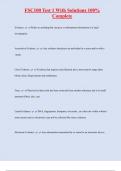
FSC100 Test 1 With Solutions 100%
Complete
Evidence Refers to anything that can give or substantiate information in a legal
investigation
Associative Evidence Any evidence that places an individual at a scene and/or with a
victim
Class Evidence Evidence that requires classification into a more narrow range (hair,
blood, urine, things human and nonhuman)
Trace Physical evidence that has been extracted from another substance and is in small
amounts (fibres, dirt...etc)
Latent Evidence DNA, fingerprints, footprints, tire tracks...etc often not visible without
some means such as electronics (can not be collected like trace evidence)
Electronic Evidence Any information transmitted by or stored in an electronic device.
, FSC100 Test 1 With Solutions 100%
Complete
Indicative Evidence Physical evidence that proves that a certain period of time has elapsed
(rate of body decomposing)
Circumstantial Collection of facts and observations that infer the culpability of an
individual but MAY ALSO BE coincidental — does not establish guilt or that crime has been
committed. (fingerprint on bag, blood at scene, suspect being in area of crime...etc)
Witnesses a person who sees a crime take place
Indirect Witness a person who did not witness the crime but knows the people or objects
involved (E.X. bus driver that can identify a regular passenger)
Direct Witness a witness who saw the crime (aka an eyewitness who brings testimonial
evidence or observational testimony)
Expert Witness specialist who processes physical evidence for a legal investigation
Complete
Evidence Refers to anything that can give or substantiate information in a legal
investigation
Associative Evidence Any evidence that places an individual at a scene and/or with a
victim
Class Evidence Evidence that requires classification into a more narrow range (hair,
blood, urine, things human and nonhuman)
Trace Physical evidence that has been extracted from another substance and is in small
amounts (fibres, dirt...etc)
Latent Evidence DNA, fingerprints, footprints, tire tracks...etc often not visible without
some means such as electronics (can not be collected like trace evidence)
Electronic Evidence Any information transmitted by or stored in an electronic device.
, FSC100 Test 1 With Solutions 100%
Complete
Indicative Evidence Physical evidence that proves that a certain period of time has elapsed
(rate of body decomposing)
Circumstantial Collection of facts and observations that infer the culpability of an
individual but MAY ALSO BE coincidental — does not establish guilt or that crime has been
committed. (fingerprint on bag, blood at scene, suspect being in area of crime...etc)
Witnesses a person who sees a crime take place
Indirect Witness a person who did not witness the crime but knows the people or objects
involved (E.X. bus driver that can identify a regular passenger)
Direct Witness a witness who saw the crime (aka an eyewitness who brings testimonial
evidence or observational testimony)
Expert Witness specialist who processes physical evidence for a legal investigation