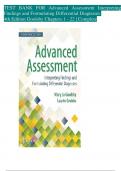
TEST BANK FOR Advanced Assessment Interpreting
Findings and Formulating Differential Diagnoses
4th Edition Goolsby Chapters 1 - 22 | Complete
, TABLE OF CONTENTS
J J
ChapterJ1.JAssessmentJandJClinicalJDecisionJMaking:JAnJOverview
ChapterJ2.JGenomicJAssessment:JInterpretingJFindingsJandJFormulatingJDifferentialJDiagnoses
ChapterJ3.JSkin
ChapterJ4.JHead,JFace,JandJNeck
ChapterJ5.JTheJEye
ChapterJ6.JEar,JNose,JMouth,JandJThroat
ChapterJ7.JCardiacJandJPeripheralJVascularJSystems
ChapterJ8.JRespiratoryJSystem
ChapterJ9.JBreasts
ChapterJ10.JAbdomen
ChapterJ11.JGenitourinaryJSystem
ChapterJ12.JMaleJReproductiveJSystem
ChapterJ13.JFemaleJReproductiveJSystem
ChapterJ14.JMusculoskeletalJSystem
ChapterJ15.JNeurologicalJSystem
ChapterJ16.JNonspecificJComplaints
ChapterJ17.JPsychiatricJMentalJHealth
ChapterJ18.JPediatricJPatients
ChapterJ19.JPregnantJPatients
ChapterJ20.JAssessmentJofJtheJTransgenderJorJGenderJDiverseJAdult
ChapterJ21.JOlderJPatients
ChapterJ22.JPersonsJWithJDisabilities
, Chapter 1. Assessment and Clinical Decision Making: An Overview
J J J J J J J J
MultipleJ Choice
IdentifyJtheJchoiceJthatJbestJcompletesJtheJstatementJorJanswersJtheJquestion.
J 1. WhichJtypeJofJclinicalJdecision-makingJisJmostJreliable?
A. Intuitive
B. Analytical
C. Experiential
D. Augenblick
J 2. WhichJofJtheJfollowingJisJfalse?JToJobtainJadequateJhistory,Jhealth-careJprovidersJmustJbe:
A. MethodicalJandJsystematic
B. AttentiveJtoJtheJpatient‘sJverbalJandJnonverbalJlanguage
C. AbleJtoJaccuratelyJinterpretJtheJpatient‘sJresponses
D. AdeptJatJreadingJintoJtheJpatient‘sJstatements
J 3. EssentialJpartsJofJaJhealthJhistoryJincludeJallJofJtheJfollowingJexcept:
A. ChiefJcomplaint
B. HistoryJofJtheJpresentJillness
C. CurrentJvitalJsigns
D. AllJofJtheJaboveJareJessentialJhistoryJcomponents
J 4. WhichJofJtheJfollowingJisJfalse?JWhileJperformingJtheJphysicalJexamination,JtheJexaminerJmustJbeJableJto:
A. DifferentiateJbetweenJnormalJandJabnormalJfindings
B. RecallJknowledgeJofJaJrangeJofJconditionsJandJtheirJassociatedJsignsJandJsymptoms
C. RecognizeJhowJcertainJconditionsJaffectJtheJresponseJtoJotherJconditions
D. ForeseeJunpredictableJfindings
J 5. TheJfollowingJisJtheJleastJreliableJsourceJofJinformationJforJdiagnosticJstatistics:
A. Evidence-basedJinvestigations
B. PrimaryJreportsJofJresearch
C. EstimationJbasedJonJaJprovider‘sJexperience
D. PublishedJmeta-analyses
J 6. TheJfollowingJcanJbeJusedJtoJassistJinJsoundJclinicalJdecision-making:
A. AlgorithmJpublishedJinJaJpeer-reviewedJjournalJarticle
B. ClinicalJpracticeJguidelines
C. Evidence-basedJresearch
D. AllJofJtheJabove
J 7. IfJaJdiagnosticJstudyJhasJhighJsensitivity,J thisJindicatesJa:
A. HighJpercentageJofJpersonsJwithJtheJgivenJconditionJwillJhaveJanJabnormalJresult
B. LowJpercentageJofJpersonsJwithJtheJgivenJconditionJwillJhaveJanJabnormalJresult
C. LowJlikelihoodJofJnormalJresultJinJpersonsJwithoutJaJgivenJcondition
D. NoneJofJtheJabove
J 8. IfJaJdiagnosticJstudyJhasJhighJspecificity,J thisJindicatesJa:
A. LowJpercentageJofJhealthyJindividualsJwillJshowJaJnormalJresult
B. HighJpercentageJofJhealthyJindividualsJwillJshowJaJnormalJresult
C. HighJpercentageJofJindividualsJwithJaJdisorderJwillJshowJaJnormalJresult
D. LowJpercentageJofJindividualsJwithJaJdisorderJwillJshowJanJabnormalJresult
J 9. AJlikelihoodJratioJaboveJ1JindicatesJthatJaJdiagnosticJtestJshowingJa:
A. PositiveJresultJisJstronglyJassociatedJwithJtheJdisease
B. NegativeJresultJisJstronglyJassociatedJwithJabsenceJofJtheJdisease
C. PositiveJresultJisJweaklyJassociatedJwithJtheJdisease
D. NegativeJresultJisJweaklyJassociatedJwithJabsenceJofJtheJdisease
, J 10. WhichJofJtheJfollowingJclinicalJreasoningJtoolsJisJdefinedJasJevidence-basedJresourceJbasedJonJmathematicalJmodeling
toJexpressJtheJlikelihoodJofJaJconditionJinJselectJsituations,Jsettings,Jand/orJpatients?
Findings and Formulating Differential Diagnoses
4th Edition Goolsby Chapters 1 - 22 | Complete
, TABLE OF CONTENTS
J J
ChapterJ1.JAssessmentJandJClinicalJDecisionJMaking:JAnJOverview
ChapterJ2.JGenomicJAssessment:JInterpretingJFindingsJandJFormulatingJDifferentialJDiagnoses
ChapterJ3.JSkin
ChapterJ4.JHead,JFace,JandJNeck
ChapterJ5.JTheJEye
ChapterJ6.JEar,JNose,JMouth,JandJThroat
ChapterJ7.JCardiacJandJPeripheralJVascularJSystems
ChapterJ8.JRespiratoryJSystem
ChapterJ9.JBreasts
ChapterJ10.JAbdomen
ChapterJ11.JGenitourinaryJSystem
ChapterJ12.JMaleJReproductiveJSystem
ChapterJ13.JFemaleJReproductiveJSystem
ChapterJ14.JMusculoskeletalJSystem
ChapterJ15.JNeurologicalJSystem
ChapterJ16.JNonspecificJComplaints
ChapterJ17.JPsychiatricJMentalJHealth
ChapterJ18.JPediatricJPatients
ChapterJ19.JPregnantJPatients
ChapterJ20.JAssessmentJofJtheJTransgenderJorJGenderJDiverseJAdult
ChapterJ21.JOlderJPatients
ChapterJ22.JPersonsJWithJDisabilities
, Chapter 1. Assessment and Clinical Decision Making: An Overview
J J J J J J J J
MultipleJ Choice
IdentifyJtheJchoiceJthatJbestJcompletesJtheJstatementJorJanswersJtheJquestion.
J 1. WhichJtypeJofJclinicalJdecision-makingJisJmostJreliable?
A. Intuitive
B. Analytical
C. Experiential
D. Augenblick
J 2. WhichJofJtheJfollowingJisJfalse?JToJobtainJadequateJhistory,Jhealth-careJprovidersJmustJbe:
A. MethodicalJandJsystematic
B. AttentiveJtoJtheJpatient‘sJverbalJandJnonverbalJlanguage
C. AbleJtoJaccuratelyJinterpretJtheJpatient‘sJresponses
D. AdeptJatJreadingJintoJtheJpatient‘sJstatements
J 3. EssentialJpartsJofJaJhealthJhistoryJincludeJallJofJtheJfollowingJexcept:
A. ChiefJcomplaint
B. HistoryJofJtheJpresentJillness
C. CurrentJvitalJsigns
D. AllJofJtheJaboveJareJessentialJhistoryJcomponents
J 4. WhichJofJtheJfollowingJisJfalse?JWhileJperformingJtheJphysicalJexamination,JtheJexaminerJmustJbeJableJto:
A. DifferentiateJbetweenJnormalJandJabnormalJfindings
B. RecallJknowledgeJofJaJrangeJofJconditionsJandJtheirJassociatedJsignsJandJsymptoms
C. RecognizeJhowJcertainJconditionsJaffectJtheJresponseJtoJotherJconditions
D. ForeseeJunpredictableJfindings
J 5. TheJfollowingJisJtheJleastJreliableJsourceJofJinformationJforJdiagnosticJstatistics:
A. Evidence-basedJinvestigations
B. PrimaryJreportsJofJresearch
C. EstimationJbasedJonJaJprovider‘sJexperience
D. PublishedJmeta-analyses
J 6. TheJfollowingJcanJbeJusedJtoJassistJinJsoundJclinicalJdecision-making:
A. AlgorithmJpublishedJinJaJpeer-reviewedJjournalJarticle
B. ClinicalJpracticeJguidelines
C. Evidence-basedJresearch
D. AllJofJtheJabove
J 7. IfJaJdiagnosticJstudyJhasJhighJsensitivity,J thisJindicatesJa:
A. HighJpercentageJofJpersonsJwithJtheJgivenJconditionJwillJhaveJanJabnormalJresult
B. LowJpercentageJofJpersonsJwithJtheJgivenJconditionJwillJhaveJanJabnormalJresult
C. LowJlikelihoodJofJnormalJresultJinJpersonsJwithoutJaJgivenJcondition
D. NoneJofJtheJabove
J 8. IfJaJdiagnosticJstudyJhasJhighJspecificity,J thisJindicatesJa:
A. LowJpercentageJofJhealthyJindividualsJwillJshowJaJnormalJresult
B. HighJpercentageJofJhealthyJindividualsJwillJshowJaJnormalJresult
C. HighJpercentageJofJindividualsJwithJaJdisorderJwillJshowJaJnormalJresult
D. LowJpercentageJofJindividualsJwithJaJdisorderJwillJshowJanJabnormalJresult
J 9. AJlikelihoodJratioJaboveJ1JindicatesJthatJaJdiagnosticJtestJshowingJa:
A. PositiveJresultJisJstronglyJassociatedJwithJtheJdisease
B. NegativeJresultJisJstronglyJassociatedJwithJabsenceJofJtheJdisease
C. PositiveJresultJisJweaklyJassociatedJwithJtheJdisease
D. NegativeJresultJisJweaklyJassociatedJwithJabsenceJofJtheJdisease
, J 10. WhichJofJtheJfollowingJclinicalJreasoningJtoolsJisJdefinedJasJevidence-basedJresourceJbasedJonJmathematicalJmodeling
toJexpressJtheJlikelihoodJofJaJconditionJinJselectJsituations,Jsettings,Jand/orJpatients?