AQA-GCSE Biology Topic 6 exams already passed
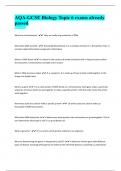
What are chromosomes? - They are really long molecules of DNA What does DNA stand for - DeoxyribonNucleicAcid. It is a complex chemical in a thread-like chain. It contains coded information and genetic information Where is DNA found - It is found in the nucleus of animal and plant cells in long structures called chromosomes. Chromosomes normally come in pairs What is DNA structure called - It is a polymer. It is made up of two strands coiled together in the shape of a double helix. What is a gene - It is a small section of DNA found on a chromosome. Each gene codes a particular sequence of amino which are put together to make a specific protein. Tells the order to put the amino acids together. How many acids are used to make a specific protein - 20 amino acids are used to make up thousands of different proteins. What does DNA determine - It determines what proteins the cell produces e.g haemoglobin. That in turn determines what type of cell it is e.g red blood cell What is genome? - It is an entire set of genetic material in an organism. Why are determining the genes in the genome useful? - It allows to link the gene with different types of disease. Knowing which genes are linked to the inherited diseases could help us understand them and develop effective treatments for them. Scientists can look at genomes to trace the migration of certain populations of people around the world. It can tell us when new populations split off in different direction and what route they took What is reproduction - It is when genetic information in the chromosomes is passed on from parents to their offspring. There are two very different ways of reproducing asexual reproduction and sexual reproduction What is asexual reproduction - This only involves one parent. The cells divide by mitosis. There is no joining (fusion) of special sex cells (gametes) and so there is no mixing of genetic information. What is there not in asexual reproduction - There is no variation. What do asexual reproduction give a rise to - It gives a rise to genetically identical offspring known as clones. Their genetic material is identical both to the parent and to each other. Only mitosis is involved in asexual reproduction What is asexual reproduction common in - smallest animals and plants, and in fungi and bacteria. The cells of your body reproduce asexually all the time. What is mitosis. - They divide into two identical cells What is sexual reproduction - Is when genetic information from two organisms is combined to produce offspring which are genetically different to either parents. It is the fusion of two special sex cells to form a zygote, which goes on to develop a new individual. What is the difference between sexual reproduction and asexual - In sexual reproduction, there is genetic variation, needs gametes, slow, more energy consuming, needs meiosis. While asexual is just one parents, produces clones, less energy consuming, quick
École, étude et sujet
- Établissement
- GCSE
- Cours
- GCSE
Infos sur le Document
- Publié le
- 16 février 2024
- Nombre de pages
- 13
- Écrit en
- 2023/2024
- Type
- Examen
- Contient
- Questions et réponses
Sujets
-
aqa gcse biology topic 6 exams already passed

Document également disponible en groupe