
Business Plan
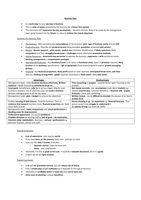
Is a route map for your journey in business.
This is a plan of action prepared by the business for a future time period.
This document will summarise the key assumptions + decisions that are likely to be made by the management
team going forward into the future i.e. plans to achieve the stated objectives.
Contents of a Business Plan:
The Business - Will summarise the name/address of the business; aims; type of business entity and the USP.
Product/service - Describe the product/service being provided; quantities; proposed sales price(s).
Market - Market research + pilot results; market size estimates; identification of likely customers; likely
competitors and their strengths/weaknesses + challenges posed; alternative promotion methods.
Human Resources - Summarise key personnel to operate the business; experience + skills workforce needs;
working arrangements + compensation packages.
Operational/Production - Key decisions/issues to be taken in functional areas; types of premises required; likely
location of the business; specifications + age of equipment (fixed assets/long-term assets); growth managing
policies.
Financial - Key financial projections; likely profit based on sales revenues; anticipated break-even; cash flow
forecast; banking arrangement; capital required; investment in fixed assets; likely debt levels.
Advantages Disadvantages
Management team - make business decisions effectively. Written Time consuming to prepare - could be better spent focusing on the
evidence + detail. Something concentrate to go on. product.
Focal point. Something to refer to at various stages. May for your Not always accurate - esp. assumptions made about markets e.g.
journey in business. Use of a business plan will assist a business - market research bias, customer behaviour + financial side - largely
decision making process to all the key areas. forecasts + same with marketing.
Management team - plan + budget to achieve key objectives. Written format - can be difficult to translate the passion of an idea in
written form.
Enables securing of debt finance - fund the business. There is Person drawing it up - no experience e.g. financial forecasts. Thus
evidence that research has been done, financial projections etc. Bank person using it may struggle to understand it.
more likely to lend. But plenty of help e.g. Invest NI, banks.
Management team - make comparisons with actual performance +
deciding areas for improvement.
Professional appearance - increased confidence.
Provides direction for existing staff as lack of goals = de-motivation.
Convince other stakeholders - business = serious + professional e.g.
potential investors, attract new staff.
Overall Conclusion:
Lack of experience - plan may be useful.
If you have been on this journey many time - perhaps no need.
Have you the time + money - if so plan:
o Dynamic market - may not have time.
o Static - plan may benefit.
Ultimately it is only as good as the user. It could be a valuable document, but it is a guide.
It won't tell all the right answers.
Typical Conclusion:
A BP will not guarantee success, but will reduce risk of failure.
Even a simple plan maybe sufficient but it depends on the type of business.
Ultimately it's probably better to have one than not to have one.
Some level of planning is always beneficial.
Is a route map for your journey in business.
This is a plan of action prepared by the business for a future time period.
This document will summarise the key assumptions + decisions that are likely to be made by the management
team going forward into the future i.e. plans to achieve the stated objectives.
Contents of a Business Plan:
The Business - Will summarise the name/address of the business; aims; type of business entity and the USP.
Product/service - Describe the product/service being provided; quantities; proposed sales price(s).
Market - Market research + pilot results; market size estimates; identification of likely customers; likely
competitors and their strengths/weaknesses + challenges posed; alternative promotion methods.
Human Resources - Summarise key personnel to operate the business; experience + skills workforce needs;
working arrangements + compensation packages.
Operational/Production - Key decisions/issues to be taken in functional areas; types of premises required; likely
location of the business; specifications + age of equipment (fixed assets/long-term assets); growth managing
policies.
Financial - Key financial projections; likely profit based on sales revenues; anticipated break-even; cash flow
forecast; banking arrangement; capital required; investment in fixed assets; likely debt levels.
Advantages Disadvantages
Management team - make business decisions effectively. Written Time consuming to prepare - could be better spent focusing on the
evidence + detail. Something concentrate to go on. product.
Focal point. Something to refer to at various stages. May for your Not always accurate - esp. assumptions made about markets e.g.
journey in business. Use of a business plan will assist a business - market research bias, customer behaviour + financial side - largely
decision making process to all the key areas. forecasts + same with marketing.
Management team - plan + budget to achieve key objectives. Written format - can be difficult to translate the passion of an idea in
written form.
Enables securing of debt finance - fund the business. There is Person drawing it up - no experience e.g. financial forecasts. Thus
evidence that research has been done, financial projections etc. Bank person using it may struggle to understand it.
more likely to lend. But plenty of help e.g. Invest NI, banks.
Management team - make comparisons with actual performance +
deciding areas for improvement.
Professional appearance - increased confidence.
Provides direction for existing staff as lack of goals = de-motivation.
Convince other stakeholders - business = serious + professional e.g.
potential investors, attract new staff.
Overall Conclusion:
Lack of experience - plan may be useful.
If you have been on this journey many time - perhaps no need.
Have you the time + money - if so plan:
o Dynamic market - may not have time.
o Static - plan may benefit.
Ultimately it is only as good as the user. It could be a valuable document, but it is a guide.
It won't tell all the right answers.
Typical Conclusion:
A BP will not guarantee success, but will reduce risk of failure.
Even a simple plan maybe sufficient but it depends on the type of business.
Ultimately it's probably better to have one than not to have one.
Some level of planning is always beneficial.


