SA Civil Resistance
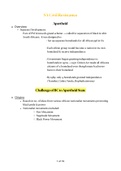
Apartheid
• Overview
• Separate Development:
Part of PM Verwoed’s grand scheme → called for separation of black & whit
South Africans. It was designed to:
: Set up separate homelands for all African ppl in SA
: Each ethnic group would become a nation in its own
homeland & receive independence
: Government began granting independence to
homrlands in 1970s → 1970 Citizen Act made all Africans
citizens of a homeland even though many had never
been to their homeland
: By 1989: only 4 homelands granted independence
(Transkei, Ciskei, Venda, Bophuthatswana)
Challenge of BC to Apartheid State
• Origins
• Based on no. of ideas from various African nationalist movements promoting
black pride & power
• Nationalist movements included:
♢ Pan-Africanism
♢ Negritude Movement
♢ Black Power Movement
1 of 19
, • Pan-Africanism
→ Roots in USA & West Indies
→ Called for unity of all Africans & those of African descent
→ Created solidarity & unity amongst Africans
→ Contributed towards the decolonisation of Africa
→ Numerous South Africans embraced Pan-Africanism eg:
: Anton Lembede (1st president of ANCYL → pioneered idea
of black nationalism in SA)
: Robert Sobukwe (saw struggle for liberation for SA as African
struggle. Broke away from ANC to form PAC (1959) → PAC
believed Africans should liberate themselves from Apartheid
w/out any foreign in uences)
• Negritude Movement
⌑ Ideological & literary movement by black intellectuals experiencing
discrimination & alienation while at uni in Paris
⌑ Black students from French colonies in Africa & West Indies rejected
colonial attitudes
⌑ De ned black culture in terms of universal black values & self-expression
⌑ Steve Biko drew on ideas of following members:
: Aimé Césaire — poet & playwright → wrote that
colonialism had disrupted history of Africa (disrupted
economy & brainwashed Africans all over the world into
believing they were inferior)
: Franz Fanon — inspired liberation struggles around the
wold w/ ideas that oppressed need to liberate their minds
& embrace there own culture & values
• Black Power Movement
❀ Organisations (eg. Black Panthers) set up self-help schemes in black
neighbourhoods → provide poor ppl w/ access to health care &
education
❀ In uenced BC movement ⇢ leaders like Malcolm X encouraged African
Americans to be proud of who they were & liberate themselves w/out
help of sympathetic whites
2 of 19
flfi fl
, • N ture & Aims of Bl ck Consciousness
• Yrs of Apartheid made black South African feel inferior to white ppl
• Began as uni student movement led by Steve Biko → aimed to conscientise:
black ppl & instil sense of self-worth & con dence
• Changed way black South Africans saw themselves & empowered them to
confront the Apartheid regime
• One of main goals = restore ppl’s pride in being black & African → did this by:
: Term “non-white” for Africans rejected in favour of “black”
: Blackness = positive concept of identity (included Coloureds &
Indians) → BC served interests of all SA who were discriminated
against on basis of skin colour
: Encouraged Africans to take pride in their culture & heritage
• Black Consciousness ideas inspired renewal of the Anti-Apartheid struggle in
1970s
• Promoted idea — black SA should liberate themselves & not reply on help from
liberal whites → built sustainable organisations @ community level ⇢ hoped to
end black dependency on whites so that they would use their won skills to
liberate themselves
• Idea of self-reliance played key role in BC thinking
• Aims:
: Restore pride & dignity to black ppl
: Encouraged black solidarity
: Encourage black ppl to reject anything that make them feel like
foreigners in their own countries
: Help black ppl build their own value systems
• Suggested black ppl should take their own economic & political power
3 of 19
a a fi
, • Steve Biko
• Regarded at one of leading political thinkers & activists in struggle Against
Apartheid
• Gifted leader & powerful speaker
• Believed association w/ whites made liberation struggle ine ective → blacks
must liberate themselves → this new approach = inspiring & drew ppl to BCM
• Encouraged democratic participation in decision making → one of the reasons
for SASO’s rapid growth
• Responsible for est. self-help groups fo black communities along w/ other
leaders of BCM
• Intellectual who wrote articles for SASO newsletters (under heading “I write what
I like” & signed “Frank Talk” ) explaining BC ideas
• Role of Steve Biko (form tion of SASO)
• Became involved in student politics while studying medicine @ UNNE in
Durban (1960s)
• Member of NUSAS → participated in conferences & leadership training
seminars
• NUSAS = although non-racial union, majority members = white middle-class
background
• Convinced black students needed own organisation where they would speak
fro themselves
• UMC formed (1967) → gave black students opportunity for representation ⇢
discussed future & need for nationally representative black student
organisation @ 1968 conference
• To form black students’ organisation Biko recruited stutend from other ethnic
universities → met & drafted constitution for SASO (Dec 1968)
• SASO’s task = ‘conscientise black communities & to instil in them self-
con dence & pride to e ectively resist white rule’
4 of 19
fi ff a ff
Apartheid
• Overview
• Separate Development:
Part of PM Verwoed’s grand scheme → called for separation of black & whit
South Africans. It was designed to:
: Set up separate homelands for all African ppl in SA
: Each ethnic group would become a nation in its own
homeland & receive independence
: Government began granting independence to
homrlands in 1970s → 1970 Citizen Act made all Africans
citizens of a homeland even though many had never
been to their homeland
: By 1989: only 4 homelands granted independence
(Transkei, Ciskei, Venda, Bophuthatswana)
Challenge of BC to Apartheid State
• Origins
• Based on no. of ideas from various African nationalist movements promoting
black pride & power
• Nationalist movements included:
♢ Pan-Africanism
♢ Negritude Movement
♢ Black Power Movement
1 of 19
, • Pan-Africanism
→ Roots in USA & West Indies
→ Called for unity of all Africans & those of African descent
→ Created solidarity & unity amongst Africans
→ Contributed towards the decolonisation of Africa
→ Numerous South Africans embraced Pan-Africanism eg:
: Anton Lembede (1st president of ANCYL → pioneered idea
of black nationalism in SA)
: Robert Sobukwe (saw struggle for liberation for SA as African
struggle. Broke away from ANC to form PAC (1959) → PAC
believed Africans should liberate themselves from Apartheid
w/out any foreign in uences)
• Negritude Movement
⌑ Ideological & literary movement by black intellectuals experiencing
discrimination & alienation while at uni in Paris
⌑ Black students from French colonies in Africa & West Indies rejected
colonial attitudes
⌑ De ned black culture in terms of universal black values & self-expression
⌑ Steve Biko drew on ideas of following members:
: Aimé Césaire — poet & playwright → wrote that
colonialism had disrupted history of Africa (disrupted
economy & brainwashed Africans all over the world into
believing they were inferior)
: Franz Fanon — inspired liberation struggles around the
wold w/ ideas that oppressed need to liberate their minds
& embrace there own culture & values
• Black Power Movement
❀ Organisations (eg. Black Panthers) set up self-help schemes in black
neighbourhoods → provide poor ppl w/ access to health care &
education
❀ In uenced BC movement ⇢ leaders like Malcolm X encouraged African
Americans to be proud of who they were & liberate themselves w/out
help of sympathetic whites
2 of 19
flfi fl
, • N ture & Aims of Bl ck Consciousness
• Yrs of Apartheid made black South African feel inferior to white ppl
• Began as uni student movement led by Steve Biko → aimed to conscientise:
black ppl & instil sense of self-worth & con dence
• Changed way black South Africans saw themselves & empowered them to
confront the Apartheid regime
• One of main goals = restore ppl’s pride in being black & African → did this by:
: Term “non-white” for Africans rejected in favour of “black”
: Blackness = positive concept of identity (included Coloureds &
Indians) → BC served interests of all SA who were discriminated
against on basis of skin colour
: Encouraged Africans to take pride in their culture & heritage
• Black Consciousness ideas inspired renewal of the Anti-Apartheid struggle in
1970s
• Promoted idea — black SA should liberate themselves & not reply on help from
liberal whites → built sustainable organisations @ community level ⇢ hoped to
end black dependency on whites so that they would use their won skills to
liberate themselves
• Idea of self-reliance played key role in BC thinking
• Aims:
: Restore pride & dignity to black ppl
: Encouraged black solidarity
: Encourage black ppl to reject anything that make them feel like
foreigners in their own countries
: Help black ppl build their own value systems
• Suggested black ppl should take their own economic & political power
3 of 19
a a fi
, • Steve Biko
• Regarded at one of leading political thinkers & activists in struggle Against
Apartheid
• Gifted leader & powerful speaker
• Believed association w/ whites made liberation struggle ine ective → blacks
must liberate themselves → this new approach = inspiring & drew ppl to BCM
• Encouraged democratic participation in decision making → one of the reasons
for SASO’s rapid growth
• Responsible for est. self-help groups fo black communities along w/ other
leaders of BCM
• Intellectual who wrote articles for SASO newsletters (under heading “I write what
I like” & signed “Frank Talk” ) explaining BC ideas
• Role of Steve Biko (form tion of SASO)
• Became involved in student politics while studying medicine @ UNNE in
Durban (1960s)
• Member of NUSAS → participated in conferences & leadership training
seminars
• NUSAS = although non-racial union, majority members = white middle-class
background
• Convinced black students needed own organisation where they would speak
fro themselves
• UMC formed (1967) → gave black students opportunity for representation ⇢
discussed future & need for nationally representative black student
organisation @ 1968 conference
• To form black students’ organisation Biko recruited stutend from other ethnic
universities → met & drafted constitution for SASO (Dec 1968)
• SASO’s task = ‘conscientise black communities & to instil in them self-
con dence & pride to e ectively resist white rule’
4 of 19
fi ff a ff