Lecture 1 Intro El Aidy
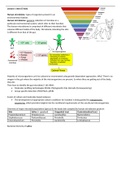
Human microbiota: types of organisms present in an
environmental habitat.
Human microbiome: genome collection of microbes in a
particular environmental system, which refer to their function.
The human microbiome is comprised of different microbiota that
colonise different habits of the body. Microbiota colonizing the skin
is different from that of the gut.
Majority of microorganisms can’t be cultured or enumerated using growth-dependent approaches. Why? There’s no
oxygen in the gut where the majority of the microorganisms are present. So when they are getting out of the body,
they die.
Then how to identify the gut microbiota? 16S rRNA:
Molecular profiling technologies (DGGE, Phylogenetic chip, Barcode Pyrosequencing).
Group specific detection (FISH/FACS, qPCR).
Fusion of culture and molecular-based analyses:
The development of appropriate culture conditions for isolation is being guided by metagenomic
sequencing, which provides insights into the nutritional requirements of the uncultured microorganisms.
Overview of major microbial populations (genus) in the body sites sampled by human microbiome projects:
Skin Saliva (= speeksel) Urogenital tract Gastrointestinal tract
Propionibacterium Streptococcus Lactobacillus Bacteroidetes
Staphylococcus Pasteurellaceae Prevotella Firmicutes
Corynebacterium Prevotella Gardnerella Lentisphaerae
Bacterial diversity of saliva:
, Firmicutes (gram-pos.) Bacteroidetes (gram-neg.) Proteobacteria (gram-neg.)
Veillonellaceae Prevotellaceae Neisseriaceae
Streptococcaceae Porphyromonadaceae Campylobacteraceae
Lachnospiraceae Flavobacteriaceae Pasteurellaceae
Horizontal: phylum
Vertical: family
Oral cavities and airways:
The oral cavity is a complex, heterogeneous microbial habitat.
Saliva contains antimicrobial enzymes.
High concentrations of nutrients near surfaces in the mouth
promote localized microbial growth.
The tooth consists of a mineral matrix (enamel) surrounding
living tissue, the dentin, and pulp.
From out- to inside: enamel – dentin – pulp.
Respiratory tract:
Microbes thrive in the upper respiratory tract.
- Bacteria continually enter upper respiratory tract from the
air during breathing.
- Most are trapped in the mucus (= slijm) of the nasal and
oral passages and expelled with nasal secretions or
swallowed and then killed in the stomach.
Lower respiratory tract has no normal microbiota in healthy adults.
- Ciliated mucosal (= slijmvliesharen) cells move particles up and out
of the lungs.
Gastrointestinal microbiota:
Humans are monogastric (= één maag) and omnivorous (= alleseter).
Microbes in the gut affect early development, health, and
predisposition (= aanleg) to disease.
Colonization of the gut begins at birth.
Small intestine vs. large intestine:
Small intestine: absorption of nutrients, so larger surface area: villi.
Mucus layer is very rich in nutrients, microbiota like to live there. It’s
thicker in the large intestine than in the small intestine, therefore
more microbiota in the mucus layer of the large intestine.
Gastrointestinal microbiota:
The stomach and small intestine:
- Microbial populations in different areas of the GI tract are influenced by diet and the physical conditions
in the area.
- The acidity of the stomach (~pH 2) prevents many organisms from colonizing the GI tract. However,
there’s a rich microbiome in the healthy stomach.
- Firmicutes, Bacteroidetes, and Actinobacteria are common in the gastric fluid, while Firmicutes and
Proteobacteria are common in the mucus layer of the stomach.
- Helicobacter pylori was discovered in the 1980s and has since been found in ~50% of the world’s
population. When it’s present, it’s found in the gastric mucosa.
Large intestine microbiota:
Bacteroidetes (phylum) Firmicutes
Bacteroidaceae (family) Ruminococcaceae
Lachnospiraceae
,Gastrointestinal microbiota:
Intestinal microorganisms carry out a variety of essential metabolic reactions that produce various
compounds.
The large intestine
- The colon is essentially an in vivo fermentation vessel, with the microbiota using nutrients derived from
the digestion of food.
- Most organisms are restricted to the lumen of the large intestine, while others are in the mucosal layers.
Undigested food particles in the large intestine are digested by
bacteria that have a huge amount of enzymes. It’s eventually
taken up by the host cells. The still undigested food particles are
brought to the anus.
In the ileum and large intestine only anaerobic bacteria present
because there’s no oxygen.
Gastrointestinal microbiota:
The vast majority (~98%) of all human gut phylotypes fall
into one of three major bacterial phyla: Firmicutes,
Bacteroidetes, and Proteobacteria.
- Individuals may have mostly Firmicutes, mostly Bacteroidetes, or a mix of the two. This may regulate
metabolism and the host’s tendency for obesity.
Urogenital tracts and their microbes:
Altered conditions can cause potential pathogens in the urethra (e.g. Escherichia coli and Proteus mirabilis)
to multiply and cause urinary tract infections.
The vagina of the adult female is weakly acidic and contains significant amounts of glycogen.
Lactobacillus acidophilus, a resident organism in the vagina, ferments the glycogen, producing lactic acid.
Lactic acid maintains a local acidic environment.
Vaginal bacterial diversity:
Mainly firmicutes (phylum) in there, mainly lactobacillaceae (family).
The skin and its microbes:
There’re approximately 1 million resident bacteria per cm 2 of skin for a total of about 1010 skin
microorganisms covering the average adult.
The skin surface varies greatly in chemical composition and moisture content.
3 microenvironments:
- Dry skin
- Moist skin
- Sebaceous skin (oily)
The composition is influenced by:
- Environmental factors (e.g. weather).
- Host factors (e.g. age, personal hygiene).
Each microenvironment shows a unique microbiota.
Skin bacterial diversity at the inside of the elbow:
, Actinobacteria Firmicutes Proteobacteria Bacteroidetes
Propionibacteriaceae Staphylococcaceae Burkholderiaceae Bacteroidaceae
(Corynebacteriaceae) (Streptococcaceae) (Neisseriaceae) Flavobacteriaceae
(Lactobacillaceae) prevotellaceae
Human study groups and animal models:
Human microbiome study groups have formed most of our understanding of the functions of the human
microbiome.
- The Human Microbiome Project (HMO) surveyed hundreds of medical students over several years to
determine a baseline for healthy human microbiomes.
- Later projects showed the weakness in this model, as they revealed more diversity in non-US born
subjects and lacked data on diet or other lifestyle attributes.
While there’re significant differences between mice and humans, mice have been used to study human gut
microbiome interactions.
- Mice have a larger cecum (= blindedarm) than humans.
- Most fermentation is completed in the mouse cecum,
rather than the human large intestine.
Mice have a short life cycle and well-defined genetic lines.
They can be raised in a germ-free environment.
- Antibiotic therapy
- Strict dietary control
- Fecal transplants
- Germ-free environment
Colonization, succession and stability of the gut microbiota:
Microbial activities in the first year of life:
- Colonization begins at birth, with transfer from mother to infant.
- Early colonizing microbes are a source of vitamins and tend to be facultative rather than obligate
anaerobes.
Variables determine the nature of the gut microbiome:
- Vaginally born infants have a microbiome more similar to that of their mothers than those born via
Cesarean section.
- Breastfed infants have more of a certain type of commensal bacteria (Bifidobacteria), as breast milk has
oligosaccharides that promote their colonization.
Stability of the adult microbiome and transitions with age.
- Early experiences determine gut microbiome.
- Aging and frailty (= zwakheid) are associated with decreased microbial diversity.
Disorders attributed to the gut microbiota:
The role of the gut microbiota in obesity (mouse models):
- Normal mice have 40% more fat than germ-free mice with the same diet.
When germ-free mice were given normal mouse microbiota, they started gaining weight.
- Mice that are genetically obese have different microbiota than normal mice. Obese mice have more
Firmicutes.
- Like the mouse model, obese humans have more Firmicutes than non-obese humans.
Human microbiota: types of organisms present in an
environmental habitat.
Human microbiome: genome collection of microbes in a
particular environmental system, which refer to their function.
The human microbiome is comprised of different microbiota that
colonise different habits of the body. Microbiota colonizing the skin
is different from that of the gut.
Majority of microorganisms can’t be cultured or enumerated using growth-dependent approaches. Why? There’s no
oxygen in the gut where the majority of the microorganisms are present. So when they are getting out of the body,
they die.
Then how to identify the gut microbiota? 16S rRNA:
Molecular profiling technologies (DGGE, Phylogenetic chip, Barcode Pyrosequencing).
Group specific detection (FISH/FACS, qPCR).
Fusion of culture and molecular-based analyses:
The development of appropriate culture conditions for isolation is being guided by metagenomic
sequencing, which provides insights into the nutritional requirements of the uncultured microorganisms.
Overview of major microbial populations (genus) in the body sites sampled by human microbiome projects:
Skin Saliva (= speeksel) Urogenital tract Gastrointestinal tract
Propionibacterium Streptococcus Lactobacillus Bacteroidetes
Staphylococcus Pasteurellaceae Prevotella Firmicutes
Corynebacterium Prevotella Gardnerella Lentisphaerae
Bacterial diversity of saliva:
, Firmicutes (gram-pos.) Bacteroidetes (gram-neg.) Proteobacteria (gram-neg.)
Veillonellaceae Prevotellaceae Neisseriaceae
Streptococcaceae Porphyromonadaceae Campylobacteraceae
Lachnospiraceae Flavobacteriaceae Pasteurellaceae
Horizontal: phylum
Vertical: family
Oral cavities and airways:
The oral cavity is a complex, heterogeneous microbial habitat.
Saliva contains antimicrobial enzymes.
High concentrations of nutrients near surfaces in the mouth
promote localized microbial growth.
The tooth consists of a mineral matrix (enamel) surrounding
living tissue, the dentin, and pulp.
From out- to inside: enamel – dentin – pulp.
Respiratory tract:
Microbes thrive in the upper respiratory tract.
- Bacteria continually enter upper respiratory tract from the
air during breathing.
- Most are trapped in the mucus (= slijm) of the nasal and
oral passages and expelled with nasal secretions or
swallowed and then killed in the stomach.
Lower respiratory tract has no normal microbiota in healthy adults.
- Ciliated mucosal (= slijmvliesharen) cells move particles up and out
of the lungs.
Gastrointestinal microbiota:
Humans are monogastric (= één maag) and omnivorous (= alleseter).
Microbes in the gut affect early development, health, and
predisposition (= aanleg) to disease.
Colonization of the gut begins at birth.
Small intestine vs. large intestine:
Small intestine: absorption of nutrients, so larger surface area: villi.
Mucus layer is very rich in nutrients, microbiota like to live there. It’s
thicker in the large intestine than in the small intestine, therefore
more microbiota in the mucus layer of the large intestine.
Gastrointestinal microbiota:
The stomach and small intestine:
- Microbial populations in different areas of the GI tract are influenced by diet and the physical conditions
in the area.
- The acidity of the stomach (~pH 2) prevents many organisms from colonizing the GI tract. However,
there’s a rich microbiome in the healthy stomach.
- Firmicutes, Bacteroidetes, and Actinobacteria are common in the gastric fluid, while Firmicutes and
Proteobacteria are common in the mucus layer of the stomach.
- Helicobacter pylori was discovered in the 1980s and has since been found in ~50% of the world’s
population. When it’s present, it’s found in the gastric mucosa.
Large intestine microbiota:
Bacteroidetes (phylum) Firmicutes
Bacteroidaceae (family) Ruminococcaceae
Lachnospiraceae
,Gastrointestinal microbiota:
Intestinal microorganisms carry out a variety of essential metabolic reactions that produce various
compounds.
The large intestine
- The colon is essentially an in vivo fermentation vessel, with the microbiota using nutrients derived from
the digestion of food.
- Most organisms are restricted to the lumen of the large intestine, while others are in the mucosal layers.
Undigested food particles in the large intestine are digested by
bacteria that have a huge amount of enzymes. It’s eventually
taken up by the host cells. The still undigested food particles are
brought to the anus.
In the ileum and large intestine only anaerobic bacteria present
because there’s no oxygen.
Gastrointestinal microbiota:
The vast majority (~98%) of all human gut phylotypes fall
into one of three major bacterial phyla: Firmicutes,
Bacteroidetes, and Proteobacteria.
- Individuals may have mostly Firmicutes, mostly Bacteroidetes, or a mix of the two. This may regulate
metabolism and the host’s tendency for obesity.
Urogenital tracts and their microbes:
Altered conditions can cause potential pathogens in the urethra (e.g. Escherichia coli and Proteus mirabilis)
to multiply and cause urinary tract infections.
The vagina of the adult female is weakly acidic and contains significant amounts of glycogen.
Lactobacillus acidophilus, a resident organism in the vagina, ferments the glycogen, producing lactic acid.
Lactic acid maintains a local acidic environment.
Vaginal bacterial diversity:
Mainly firmicutes (phylum) in there, mainly lactobacillaceae (family).
The skin and its microbes:
There’re approximately 1 million resident bacteria per cm 2 of skin for a total of about 1010 skin
microorganisms covering the average adult.
The skin surface varies greatly in chemical composition and moisture content.
3 microenvironments:
- Dry skin
- Moist skin
- Sebaceous skin (oily)
The composition is influenced by:
- Environmental factors (e.g. weather).
- Host factors (e.g. age, personal hygiene).
Each microenvironment shows a unique microbiota.
Skin bacterial diversity at the inside of the elbow:
, Actinobacteria Firmicutes Proteobacteria Bacteroidetes
Propionibacteriaceae Staphylococcaceae Burkholderiaceae Bacteroidaceae
(Corynebacteriaceae) (Streptococcaceae) (Neisseriaceae) Flavobacteriaceae
(Lactobacillaceae) prevotellaceae
Human study groups and animal models:
Human microbiome study groups have formed most of our understanding of the functions of the human
microbiome.
- The Human Microbiome Project (HMO) surveyed hundreds of medical students over several years to
determine a baseline for healthy human microbiomes.
- Later projects showed the weakness in this model, as they revealed more diversity in non-US born
subjects and lacked data on diet or other lifestyle attributes.
While there’re significant differences between mice and humans, mice have been used to study human gut
microbiome interactions.
- Mice have a larger cecum (= blindedarm) than humans.
- Most fermentation is completed in the mouse cecum,
rather than the human large intestine.
Mice have a short life cycle and well-defined genetic lines.
They can be raised in a germ-free environment.
- Antibiotic therapy
- Strict dietary control
- Fecal transplants
- Germ-free environment
Colonization, succession and stability of the gut microbiota:
Microbial activities in the first year of life:
- Colonization begins at birth, with transfer from mother to infant.
- Early colonizing microbes are a source of vitamins and tend to be facultative rather than obligate
anaerobes.
Variables determine the nature of the gut microbiome:
- Vaginally born infants have a microbiome more similar to that of their mothers than those born via
Cesarean section.
- Breastfed infants have more of a certain type of commensal bacteria (Bifidobacteria), as breast milk has
oligosaccharides that promote their colonization.
Stability of the adult microbiome and transitions with age.
- Early experiences determine gut microbiome.
- Aging and frailty (= zwakheid) are associated with decreased microbial diversity.
Disorders attributed to the gut microbiota:
The role of the gut microbiota in obesity (mouse models):
- Normal mice have 40% more fat than germ-free mice with the same diet.
When germ-free mice were given normal mouse microbiota, they started gaining weight.
- Mice that are genetically obese have different microbiota than normal mice. Obese mice have more
Firmicutes.
- Like the mouse model, obese humans have more Firmicutes than non-obese humans.