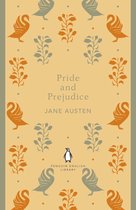
AQA Specification B - Component 3:
Theory and Independence
7717 C - Non Exam Assessment (NEA)
‘To what extent, focusing on the Marxist perspective, is ‘Pride
and Prejudice’ more about money than romance’?
It is clear from the start of ‘Pride and Prejudice’ that Austen is mindful of the
societal conditions of her characters, especially the autonomy that economic
freedom grants to men in comparison to the dependency that is expected of
women. Consequently, women’s choices are restricted, based almost entirely on
their social status and family connections, as they are allowed any inheritance.
Hence, the ironic initial lines: “It is a truth universally acknowledged, that a
single man in possession of a good fortune must be in want of a wife,”
highlighting the central theme of marriage and how women are obsessed with
finding a man for financial stability. Perhaps this line carries an air of
presumption in that it thinks on behalf of men what they would want or as if
women of the era wanted it to be true. Claiming it to be a universal truth is
pretentious but this is not to say that this famous line is an indication of the
author’s own mistaken preconceptions – either born of pride of her gender or
out of ignorance. One may also argue that Austen seems to be using this line as
a ploy to invoke critical thinking on the part of the reader. Within the Critical
Anthology, this echoes the Marxist perspective which suggests that ‘literature
is the product of the writer’s own class and cultural values’ 1 and that literary
texts themselves exist as products of a particular ideology.
Thus, females are expected to search for such affluent males in order to
survive financially; as “a woman’s interests were indistinguishable from the
interests of a class equally invested in redefining property” 2. This notion
1
Critical Anthology – Marxist ways of Reading
2
Gibbs, Frederick W., and Daniel J. Cohen. “A Conversation with Data: Prospecting Victorian Words and Ideas.”
Victorian Studies 54.1 (2011)
1
, AQA Specification B - Component 3:
Theory and Independence
7717 C - Non Exam Assessment (NEA)
correlates with the traditional 18th century idea that families sought to acquire
greater social status and money for their daughters by arranging
their marriages, thus establishing them as financially reliant and ultimately
being deemed as commodities in the Victorian period. Capitalist tendencies had
taken firm root in the economic social structure of Victorian England by this
time, giving way to class tensions and prejudices that often compounded conflict
particularly in the lives of women.
Austen highlights the precarious nature of life for women existing upon the
edge of class and wealth boundaries. Most of the relationships in the novel are
influenced by either social position or money. The idea of wealth has changed,
there was “a perceived shift of influence from traditional structures of wealth
based on landed property”. Engels claims, that “the middle classes in England
have become the slaves of the money they worship” 3. The value of money in
society was exaggerated, it became ‘fictitious’ and led to almost considering the
money as a ‘sanctity’. This became more visible in the Victorian period, where
the middle class was bound both by business and marriages, so the disparity
between ‘the rich’ and ‘the poor’ intensified.
Austen gives us an abundance of character sin her novels Pride and Prejudice
and Sense and Sensibility, in which is she is not only concerned with sketching
the externals of her characters, but also with the psychological portrayal of
characters. It is evident that Austen uses the characterisation of Elizabeth to
defy 19th century female gender roles; being influential and independent, and
making her own decisions often conflicted with what was considered socially
acceptable behaviour. The ladies are shocked at the ‘abominable sort of
3
Herbert, Christopher. “Filthy Lucre: Victorian Ideas of Money”. Victorian Studies 44.2 (2002): 185-213
2
Theory and Independence
7717 C - Non Exam Assessment (NEA)
‘To what extent, focusing on the Marxist perspective, is ‘Pride
and Prejudice’ more about money than romance’?
It is clear from the start of ‘Pride and Prejudice’ that Austen is mindful of the
societal conditions of her characters, especially the autonomy that economic
freedom grants to men in comparison to the dependency that is expected of
women. Consequently, women’s choices are restricted, based almost entirely on
their social status and family connections, as they are allowed any inheritance.
Hence, the ironic initial lines: “It is a truth universally acknowledged, that a
single man in possession of a good fortune must be in want of a wife,”
highlighting the central theme of marriage and how women are obsessed with
finding a man for financial stability. Perhaps this line carries an air of
presumption in that it thinks on behalf of men what they would want or as if
women of the era wanted it to be true. Claiming it to be a universal truth is
pretentious but this is not to say that this famous line is an indication of the
author’s own mistaken preconceptions – either born of pride of her gender or
out of ignorance. One may also argue that Austen seems to be using this line as
a ploy to invoke critical thinking on the part of the reader. Within the Critical
Anthology, this echoes the Marxist perspective which suggests that ‘literature
is the product of the writer’s own class and cultural values’ 1 and that literary
texts themselves exist as products of a particular ideology.
Thus, females are expected to search for such affluent males in order to
survive financially; as “a woman’s interests were indistinguishable from the
interests of a class equally invested in redefining property” 2. This notion
1
Critical Anthology – Marxist ways of Reading
2
Gibbs, Frederick W., and Daniel J. Cohen. “A Conversation with Data: Prospecting Victorian Words and Ideas.”
Victorian Studies 54.1 (2011)
1
, AQA Specification B - Component 3:
Theory and Independence
7717 C - Non Exam Assessment (NEA)
correlates with the traditional 18th century idea that families sought to acquire
greater social status and money for their daughters by arranging
their marriages, thus establishing them as financially reliant and ultimately
being deemed as commodities in the Victorian period. Capitalist tendencies had
taken firm root in the economic social structure of Victorian England by this
time, giving way to class tensions and prejudices that often compounded conflict
particularly in the lives of women.
Austen highlights the precarious nature of life for women existing upon the
edge of class and wealth boundaries. Most of the relationships in the novel are
influenced by either social position or money. The idea of wealth has changed,
there was “a perceived shift of influence from traditional structures of wealth
based on landed property”. Engels claims, that “the middle classes in England
have become the slaves of the money they worship” 3. The value of money in
society was exaggerated, it became ‘fictitious’ and led to almost considering the
money as a ‘sanctity’. This became more visible in the Victorian period, where
the middle class was bound both by business and marriages, so the disparity
between ‘the rich’ and ‘the poor’ intensified.
Austen gives us an abundance of character sin her novels Pride and Prejudice
and Sense and Sensibility, in which is she is not only concerned with sketching
the externals of her characters, but also with the psychological portrayal of
characters. It is evident that Austen uses the characterisation of Elizabeth to
defy 19th century female gender roles; being influential and independent, and
making her own decisions often conflicted with what was considered socially
acceptable behaviour. The ladies are shocked at the ‘abominable sort of
3
Herbert, Christopher. “Filthy Lucre: Victorian Ideas of Money”. Victorian Studies 44.2 (2002): 185-213
2