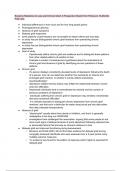
Bonanno Resilience to Loss and Chronic Grief: A Prospective Study From Preloss to 18-Months
Post Loss
● Individual differences in how much and for how long people grieve
● Prolonged/chronic grieving
● Absence of grief symptoms
● Delayed grief responses
● some patterns of grief reaction are not possible to detect without pre loss data
● no study has yet distinguished chronic grief reactions from preexisting chronic
depression
● no study has yet distinguished chronic grief reactions from preexisting chronic
depression
● Goal of study
○ Operationally define chronic grief and resilience and to distinguish these patterns
from other related patterns of reaction to loss
○ Evaluate a number of contemporary hypotheses about the antecedents of
chronic grief and absence of grief by identifying pre loss predictors of these
patterns
● Chronic grief
○ If a person displays consistently elevated levels of depression following the death
of a spouse, how can we determine whether this represents an intense and
prolonged grief reaction, or whether it merely reflects preexisting
psychopathology?
○ depression-related memory biases may inflate the relationship between current
and prior difficulties
○ Depressed individuals tend to overestimate the intensity and the number of
previous symptoms of depression
○ individuals suffering from chronic grief or depression may similarly overestimate
their prior emotional difficulties
○ it is critically important to distinguish chronic depression from chronic grief
reactions, and that such a distinction be made using actual pre loss data rather
than data collected retrospectively
● Absence of grief
○ “absent grief” usually stems from denial or inhibition, and that it is generally
maladaptive in the long run HOWEVER
○ investigators have challenged this assumption, arguing that some people do not
show overt signs of distress because of quick adjustment following expected loss
or personality factors that promote an inherent resilience to loss
● Delayed grief and improved functioning during bereavement
○ Bonanno and Field (2001) did not find clear evidence for delayed grief among
conjugally bereaved individuals who were assessed over a 5-year period using
multiple outcome measures
○ “no evidence was found for the pattern of response which might be expected for
delayed grief
, ○ when a spouse has a serious illness, or when the marital relationship is
characterized by high degrees of stress, the death may provide relief or fortuitous
escape from a chronically stressful situation
○ Two groups
■ one that manifests an intense reaction to the loss
■ one that exhibits elevated distress symptoms both before and after the
loss
○ Substantial % of respondents exhibit little/no distress following the loss
○ Two additional groups
■ a resilient group who exhibit little distress both prior to and after their
spouse’s death
■ subgroup who were distressed prior to the loss, but improved following
their spouse’s death
● Four component of bereavement
○ Qualities of the relationship
■ Conflict in marital relationship is suggested as a factor contributing to
chronic grief
■ Ambivalence towards spouse + excessive dependency → chronic grief
■ Excessive dependency → anxious/preoccupied attachment style →
prolonged grief
■ Individuals with an avoidant attachment style → little distress (ltd
emotional dependence)
○ Coping strategies/resources
■ Personality traits → emotional stability, conscientiousness,
agreeableness, openness, tendency to introspect, perceived confidence
in coping
■ Religious involvement → providing a stable, shared belief system and by
providing affiliation and social support from the religious community
● Personal devotion (to the divine)
● Personal conservatism (commitment to teaching)
○ Meaning (world view)
■ a significant percentage of bereaved people report that they search for
but are unable to find any meaning in a loss → prolonged grief
■ research has associated chronic grief with views of the world as
meaningless, unjust and uncontrollable
■ social-cognitive models that suggest that the death of a spouse can
shatter a person’s belief system and prolong the grieving process
■ Individuals not actively searching for meaning following loss →adjust well
to trauma/loss
● can more readily accommodate the possibility of loss, thereby
minimizing the need to search for explanation for the loss
■ individuals who believe that generally speaking, the world is a just and fair
place may find it easier to accept their spouse’s death
, ○ Context
■ Context of serious spousal illness with intensive caregiving required →
relief from chronic stress
■ Supportive resources
● Perceived social support from friends and relatives
● Instrumental support - financial resources/help in home
maintenance/familial responsibility
■ compared with resilient individuals, chronic grievers at pre loss would
have
● Poorer quality relationship with their spouse
● Fewer coping resources
● More vulnerable world view
● Less favorable pre loss context
■ view that bereaved individuals who do not show overt signs of grieving
are not resilient but rather lack interpersonal warmth and skill, are unable
to form mature attachments, and have poor quality marriages.
Discussion
● Chronic grief reactions can be distinguished from chronic depression
● Chronic griever could be distinguished from other participants with low pre loss
depression by their elevated depression and grief symptoms at 6 month of bereavement
● Most frequent bereavement pattern : stable low depression or resilient pattern
● A sizeable minority of respondents exhibited a pattern : high pre loss depression
followed by improvement during bereavement
● No clear evidence for a delayed grief pattern
● in the absence of pre loss data, previous studies could not determine the extent that
their observations applied to chronically grieved individuals or to chronically depressed
individuals
● Clearest predictors of chronic grief = Excessive dependency
● Several pre loss variables (assumed in the literature to underlie chronic grief) were
strongly associated with chronic depression
● Chronically depressed individuals tended to have a negative view of their marriages,
high emotional instability, low confidence in coping with stress, strong belief in the
uncontrollability of negative events
● Evidence did not support the view that individuals with absent grief were superficially
attached to their spouse/avoidant/emotionally distant
● Resilient group compromised relatively well adjusted, resilient individuals, with adequate
coping resources - maladaptive profile was absent
● Depressed-improved participants maladjusted, self absorbed, inadequate coping
○ Data based on self reports/ interviewer observations
○ Only 18 months of bereavement
○ Need for longitudinal data
● Mean age of sample old - concerns about generalizability to younger individuals
Post Loss
● Individual differences in how much and for how long people grieve
● Prolonged/chronic grieving
● Absence of grief symptoms
● Delayed grief responses
● some patterns of grief reaction are not possible to detect without pre loss data
● no study has yet distinguished chronic grief reactions from preexisting chronic
depression
● no study has yet distinguished chronic grief reactions from preexisting chronic
depression
● Goal of study
○ Operationally define chronic grief and resilience and to distinguish these patterns
from other related patterns of reaction to loss
○ Evaluate a number of contemporary hypotheses about the antecedents of
chronic grief and absence of grief by identifying pre loss predictors of these
patterns
● Chronic grief
○ If a person displays consistently elevated levels of depression following the death
of a spouse, how can we determine whether this represents an intense and
prolonged grief reaction, or whether it merely reflects preexisting
psychopathology?
○ depression-related memory biases may inflate the relationship between current
and prior difficulties
○ Depressed individuals tend to overestimate the intensity and the number of
previous symptoms of depression
○ individuals suffering from chronic grief or depression may similarly overestimate
their prior emotional difficulties
○ it is critically important to distinguish chronic depression from chronic grief
reactions, and that such a distinction be made using actual pre loss data rather
than data collected retrospectively
● Absence of grief
○ “absent grief” usually stems from denial or inhibition, and that it is generally
maladaptive in the long run HOWEVER
○ investigators have challenged this assumption, arguing that some people do not
show overt signs of distress because of quick adjustment following expected loss
or personality factors that promote an inherent resilience to loss
● Delayed grief and improved functioning during bereavement
○ Bonanno and Field (2001) did not find clear evidence for delayed grief among
conjugally bereaved individuals who were assessed over a 5-year period using
multiple outcome measures
○ “no evidence was found for the pattern of response which might be expected for
delayed grief
, ○ when a spouse has a serious illness, or when the marital relationship is
characterized by high degrees of stress, the death may provide relief or fortuitous
escape from a chronically stressful situation
○ Two groups
■ one that manifests an intense reaction to the loss
■ one that exhibits elevated distress symptoms both before and after the
loss
○ Substantial % of respondents exhibit little/no distress following the loss
○ Two additional groups
■ a resilient group who exhibit little distress both prior to and after their
spouse’s death
■ subgroup who were distressed prior to the loss, but improved following
their spouse’s death
● Four component of bereavement
○ Qualities of the relationship
■ Conflict in marital relationship is suggested as a factor contributing to
chronic grief
■ Ambivalence towards spouse + excessive dependency → chronic grief
■ Excessive dependency → anxious/preoccupied attachment style →
prolonged grief
■ Individuals with an avoidant attachment style → little distress (ltd
emotional dependence)
○ Coping strategies/resources
■ Personality traits → emotional stability, conscientiousness,
agreeableness, openness, tendency to introspect, perceived confidence
in coping
■ Religious involvement → providing a stable, shared belief system and by
providing affiliation and social support from the religious community
● Personal devotion (to the divine)
● Personal conservatism (commitment to teaching)
○ Meaning (world view)
■ a significant percentage of bereaved people report that they search for
but are unable to find any meaning in a loss → prolonged grief
■ research has associated chronic grief with views of the world as
meaningless, unjust and uncontrollable
■ social-cognitive models that suggest that the death of a spouse can
shatter a person’s belief system and prolong the grieving process
■ Individuals not actively searching for meaning following loss →adjust well
to trauma/loss
● can more readily accommodate the possibility of loss, thereby
minimizing the need to search for explanation for the loss
■ individuals who believe that generally speaking, the world is a just and fair
place may find it easier to accept their spouse’s death
, ○ Context
■ Context of serious spousal illness with intensive caregiving required →
relief from chronic stress
■ Supportive resources
● Perceived social support from friends and relatives
● Instrumental support - financial resources/help in home
maintenance/familial responsibility
■ compared with resilient individuals, chronic grievers at pre loss would
have
● Poorer quality relationship with their spouse
● Fewer coping resources
● More vulnerable world view
● Less favorable pre loss context
■ view that bereaved individuals who do not show overt signs of grieving
are not resilient but rather lack interpersonal warmth and skill, are unable
to form mature attachments, and have poor quality marriages.
Discussion
● Chronic grief reactions can be distinguished from chronic depression
● Chronic griever could be distinguished from other participants with low pre loss
depression by their elevated depression and grief symptoms at 6 month of bereavement
● Most frequent bereavement pattern : stable low depression or resilient pattern
● A sizeable minority of respondents exhibited a pattern : high pre loss depression
followed by improvement during bereavement
● No clear evidence for a delayed grief pattern
● in the absence of pre loss data, previous studies could not determine the extent that
their observations applied to chronically grieved individuals or to chronically depressed
individuals
● Clearest predictors of chronic grief = Excessive dependency
● Several pre loss variables (assumed in the literature to underlie chronic grief) were
strongly associated with chronic depression
● Chronically depressed individuals tended to have a negative view of their marriages,
high emotional instability, low confidence in coping with stress, strong belief in the
uncontrollability of negative events
● Evidence did not support the view that individuals with absent grief were superficially
attached to their spouse/avoidant/emotionally distant
● Resilient group compromised relatively well adjusted, resilient individuals, with adequate
coping resources - maladaptive profile was absent
● Depressed-improved participants maladjusted, self absorbed, inadequate coping
○ Data based on self reports/ interviewer observations
○ Only 18 months of bereavement
○ Need for longitudinal data
● Mean age of sample old - concerns about generalizability to younger individuals