Herrman - time for a united action on depression
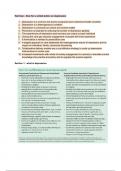
1. Depression is a common but poorly recognized and understood health condition
2. Depression is a heterogeneous condition
3. Depression is universal but culture and context matter
4. Prevention is essential to reducing the burden of depression globally
5. The experiences of depression and recovery are unique to each individual
6. Closing the care gap requires engagement of people with lived experience
7. A formulation is needed to personalize care
8. A staged approach to care addresses the heterogeneous nature of depression and its
impact on individual, family, community functioning
9. Collaborative delivery models are a cost effective strategy to scale up depression
interventions in routine care
10. Increased investments with whole of society engagement is a priority to translate current
knowledge into practice and policy and to upgrade the science agenda
Section 1 : what is depression
, ● At least 5/10 present most of the day for at least 2 weeks
● Presence of depressed mood or diminished interest or pleasure necessary
● ICD 11 hopelessness about the future only symptom not included in the DSM
Continuous/categorical?
● The definition of depression has been debated in terms of the number of symptoms or
signs required for diagnosis in both the DSM and ICD, with the consensus being at least
five, including either depressed mood or diminished interest or pleasure.
● Subthreshold depressions, characterized by less than five depressive symptoms, show
similarities to diagnosable depression in terms of future risk, family history, psychiatric
and physical comorbidity, and functional impairment.
● The concept of a "nuclear depressive syndrome" resembling the melancholic subtype
raises questions about the distinct nature of certain forms of depression.
● The idea of depression being continuous rather than categorical does not resolve the
threshold issue, leading to debates on whether normative sadness should be included in
the concept.
● The need for a threshold to distinguish subsyndromal depression from ordinary sadness
is acknowledged, with options such as requiring at least one core depressive symptom
for at least 2 weeks being considered.
● The levels of severity of depression, described as "mild," "moderate," and "severe," lack
empirical validation and are rarely used in clinical practice or trials.
● Measurement instruments like the PHQ-9 have been proposed for assessing
subsyndromal depression and severity, with cutoff scores indicating absence or
presence of depression.
● The network perspective on psychopathology suggests that the nature of depressive
symptoms, not just their intensity, should be considered in evaluating severity.
● Complicated depression, characterized by specific symptoms or signs, may predict
severity more accurately than standard symptom count measures.
● The nature of depressive symptoms and signs could also guide treatment selection,
such as pharmacotherapy versus cognitive behavioral psychotherapy
Psychopathological oversimplification?
● Concerns have been raised by mental health and social science researchers about the
oversimplification of the concept of depression in operational terms.
, ● The argument suggests that the subjective experience of individuals with depression
differs from "normal" negative moods like despair or sadness.
● Studies where individuals with depression describe their experiences or select adjectives
reveal unique aspects not fully captured by current diagnostic systems.
Higher order dimensions and specifiers
● Depression often coexists with anxiety and bodily distress, potentially representing
different presentations of a common latent phenomenon.
● Some propose a higher-order category of common mental disorders to address shared
therapeutic approaches for depressive, anxiety, and somatic symptoms.
● In a subpopulation, especially in men, depression might be part of an externalizing
spectrum, including anger attacks, aggression, substance abuse, and risk-taking
behavior.
● Both diagnostic systems provide codes for single and recurrent depressive disorders,
acknowledging partial or full remission after an episode. Persistent depressive disorder
is a separate entity in DSM-5, while ICD-11 includes a qualifier for persistent depressive
episodes lasting at least 2 years.
● Dysthymic disorder is another variant characterized by persistent depressed mood and
typical depressive symptoms that do not meet the criteria for a depressive episode.
age/gender
● In ICD-11 and DSM classifications, the primary difference in the clinical picture of
depression in children and adolescents compared to adults is that "depressed mood can
manifest as irritability."
● In older people, depression is often under-recognized or minimized, attributed to normal
aging, losses, or physical illness. The clinical picture in older individuals includes more
somatic symptoms, anxiety, psychomotor retardation or agitation, and psychotic features
● Depression is consistently found to be more common in women than in men, with the
gender difference peaking in adolescence. The clinical picture is similar in both genders,
except externalizing features are more common in men
, Culture
Section 2
● Epidemiological estimates of lifetime prevalence of depression are higher than 12-month
prevalence, indicating that 33–50% of individuals with a lifetime history of depression
experience a depressive episode in a given year.
● The naturalistic course of depression is diverse, with most depressive episodes remitting
within 1 year. Persistent depression (lasting more than 12 months) has a prevalence as
low as 12% in community surveys but can be as high as 61% among those receiving
treatment for depression in primary and secondary care settings.
● Recurrence rates after recovery vary, with individuals seeking treatment often
experiencing intermittent recurrent episodes with partial remission between episodes. In
primary or secondary care settings, recurrence rates of 71–85% have been observed in
1. Depression is a common but poorly recognized and understood health condition
2. Depression is a heterogeneous condition
3. Depression is universal but culture and context matter
4. Prevention is essential to reducing the burden of depression globally
5. The experiences of depression and recovery are unique to each individual
6. Closing the care gap requires engagement of people with lived experience
7. A formulation is needed to personalize care
8. A staged approach to care addresses the heterogeneous nature of depression and its
impact on individual, family, community functioning
9. Collaborative delivery models are a cost effective strategy to scale up depression
interventions in routine care
10. Increased investments with whole of society engagement is a priority to translate current
knowledge into practice and policy and to upgrade the science agenda
Section 1 : what is depression
, ● At least 5/10 present most of the day for at least 2 weeks
● Presence of depressed mood or diminished interest or pleasure necessary
● ICD 11 hopelessness about the future only symptom not included in the DSM
Continuous/categorical?
● The definition of depression has been debated in terms of the number of symptoms or
signs required for diagnosis in both the DSM and ICD, with the consensus being at least
five, including either depressed mood or diminished interest or pleasure.
● Subthreshold depressions, characterized by less than five depressive symptoms, show
similarities to diagnosable depression in terms of future risk, family history, psychiatric
and physical comorbidity, and functional impairment.
● The concept of a "nuclear depressive syndrome" resembling the melancholic subtype
raises questions about the distinct nature of certain forms of depression.
● The idea of depression being continuous rather than categorical does not resolve the
threshold issue, leading to debates on whether normative sadness should be included in
the concept.
● The need for a threshold to distinguish subsyndromal depression from ordinary sadness
is acknowledged, with options such as requiring at least one core depressive symptom
for at least 2 weeks being considered.
● The levels of severity of depression, described as "mild," "moderate," and "severe," lack
empirical validation and are rarely used in clinical practice or trials.
● Measurement instruments like the PHQ-9 have been proposed for assessing
subsyndromal depression and severity, with cutoff scores indicating absence or
presence of depression.
● The network perspective on psychopathology suggests that the nature of depressive
symptoms, not just their intensity, should be considered in evaluating severity.
● Complicated depression, characterized by specific symptoms or signs, may predict
severity more accurately than standard symptom count measures.
● The nature of depressive symptoms and signs could also guide treatment selection,
such as pharmacotherapy versus cognitive behavioral psychotherapy
Psychopathological oversimplification?
● Concerns have been raised by mental health and social science researchers about the
oversimplification of the concept of depression in operational terms.
, ● The argument suggests that the subjective experience of individuals with depression
differs from "normal" negative moods like despair or sadness.
● Studies where individuals with depression describe their experiences or select adjectives
reveal unique aspects not fully captured by current diagnostic systems.
Higher order dimensions and specifiers
● Depression often coexists with anxiety and bodily distress, potentially representing
different presentations of a common latent phenomenon.
● Some propose a higher-order category of common mental disorders to address shared
therapeutic approaches for depressive, anxiety, and somatic symptoms.
● In a subpopulation, especially in men, depression might be part of an externalizing
spectrum, including anger attacks, aggression, substance abuse, and risk-taking
behavior.
● Both diagnostic systems provide codes for single and recurrent depressive disorders,
acknowledging partial or full remission after an episode. Persistent depressive disorder
is a separate entity in DSM-5, while ICD-11 includes a qualifier for persistent depressive
episodes lasting at least 2 years.
● Dysthymic disorder is another variant characterized by persistent depressed mood and
typical depressive symptoms that do not meet the criteria for a depressive episode.
age/gender
● In ICD-11 and DSM classifications, the primary difference in the clinical picture of
depression in children and adolescents compared to adults is that "depressed mood can
manifest as irritability."
● In older people, depression is often under-recognized or minimized, attributed to normal
aging, losses, or physical illness. The clinical picture in older individuals includes more
somatic symptoms, anxiety, psychomotor retardation or agitation, and psychotic features
● Depression is consistently found to be more common in women than in men, with the
gender difference peaking in adolescence. The clinical picture is similar in both genders,
except externalizing features are more common in men
, Culture
Section 2
● Epidemiological estimates of lifetime prevalence of depression are higher than 12-month
prevalence, indicating that 33–50% of individuals with a lifetime history of depression
experience a depressive episode in a given year.
● The naturalistic course of depression is diverse, with most depressive episodes remitting
within 1 year. Persistent depression (lasting more than 12 months) has a prevalence as
low as 12% in community surveys but can be as high as 61% among those receiving
treatment for depression in primary and secondary care settings.
● Recurrence rates after recovery vary, with individuals seeking treatment often
experiencing intermittent recurrent episodes with partial remission between episodes. In
primary or secondary care settings, recurrence rates of 71–85% have been observed in